Japanizi
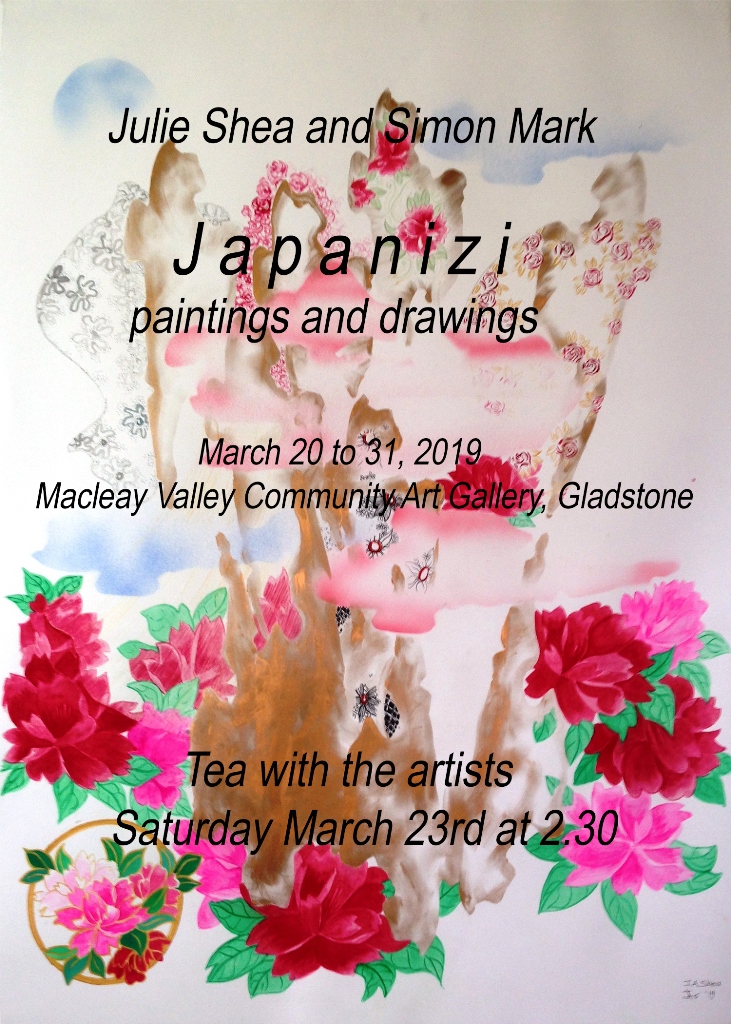
Julie Shea has been making artwork in the Macleay Valley since relocating here in 1989. She has a Bachelor of Visual Arts and Master of Cross Disciplinary Art & Design and long term practice of producing and exhibiting 2 and 3 dimensional artworks, as well as support roles to the local art industry including teaching, art supply retail, gallery curating, competition judging, art talks. She has a special interest in animism - the attribution of a living spirit, or spirits, to all manifestations of our existence – and the role of art as an animated medium.
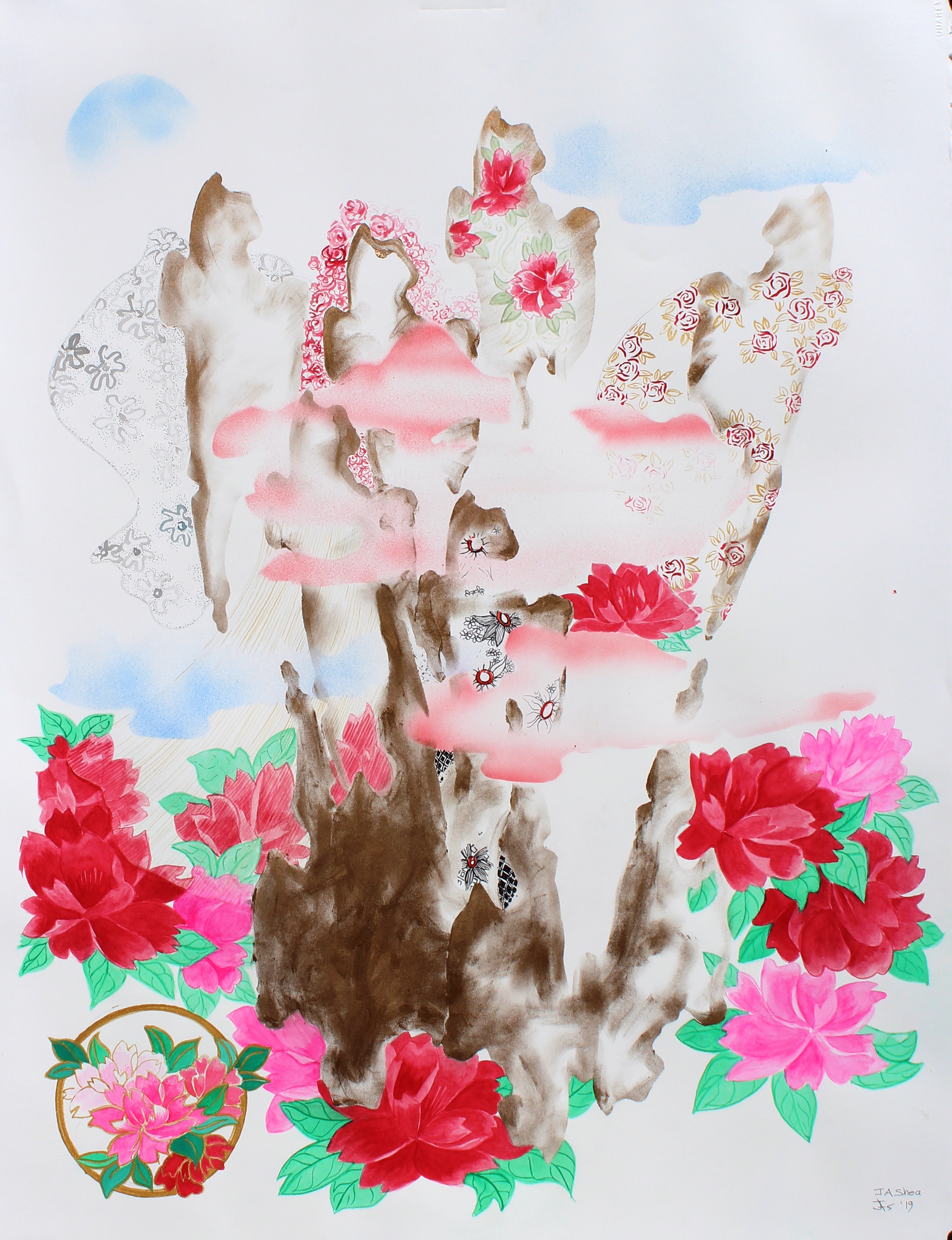
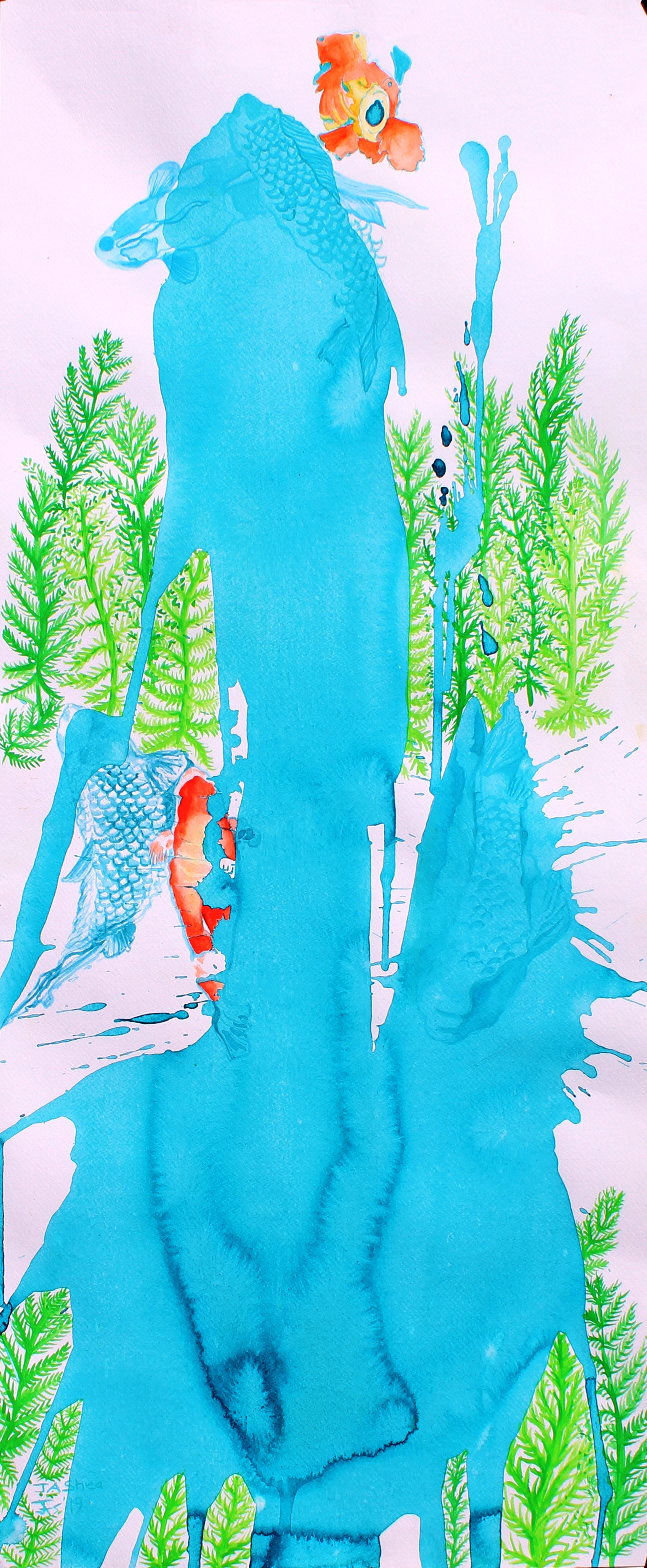
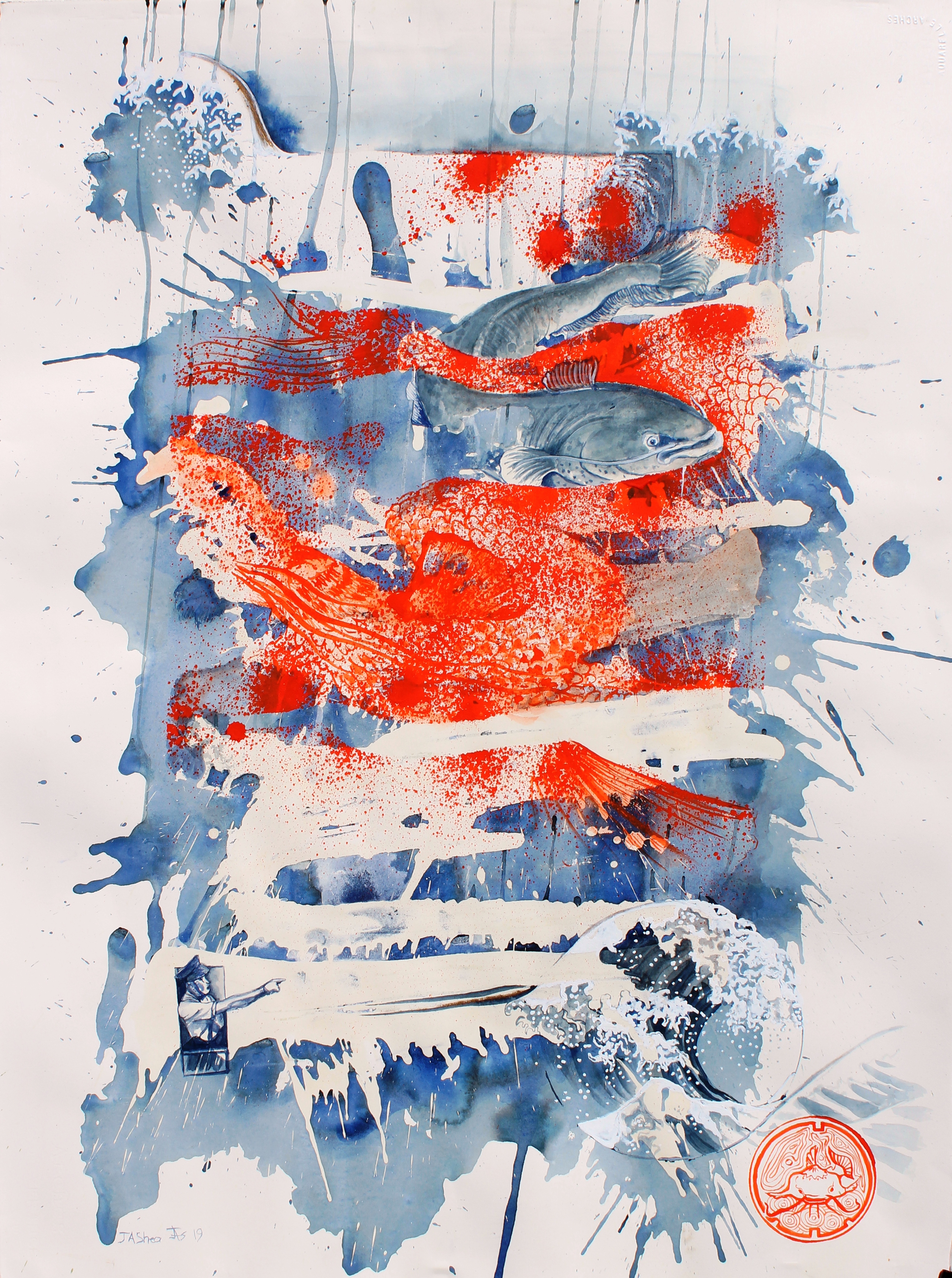
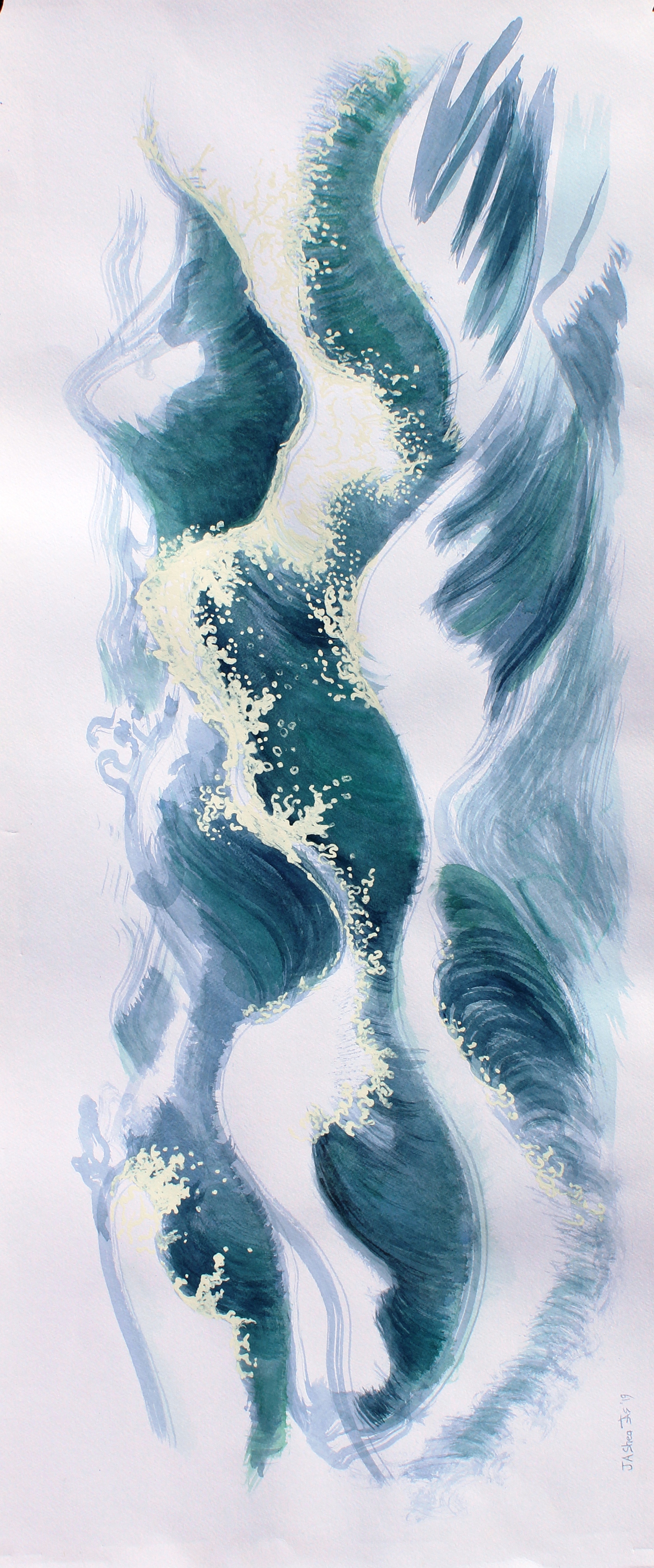
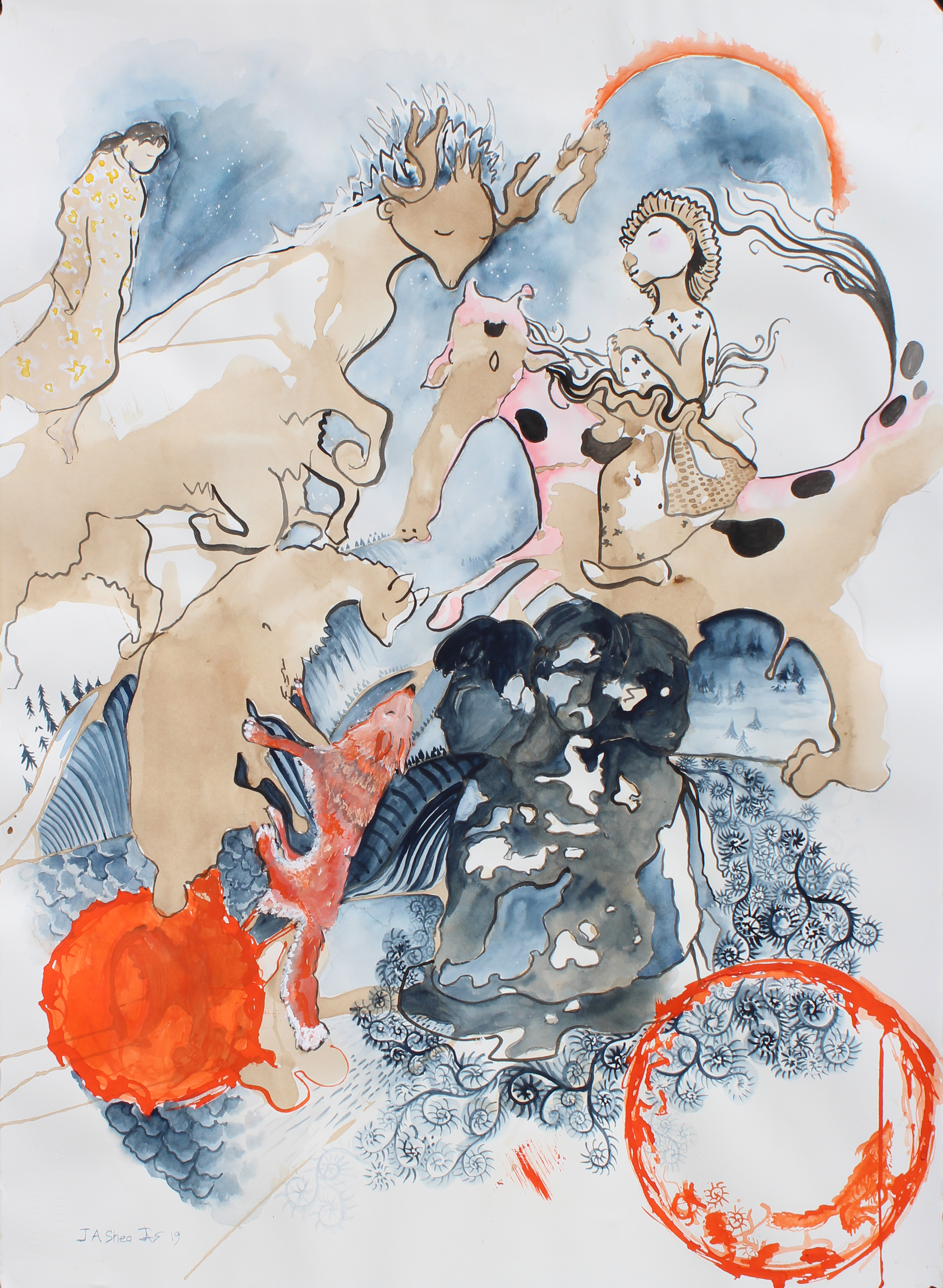
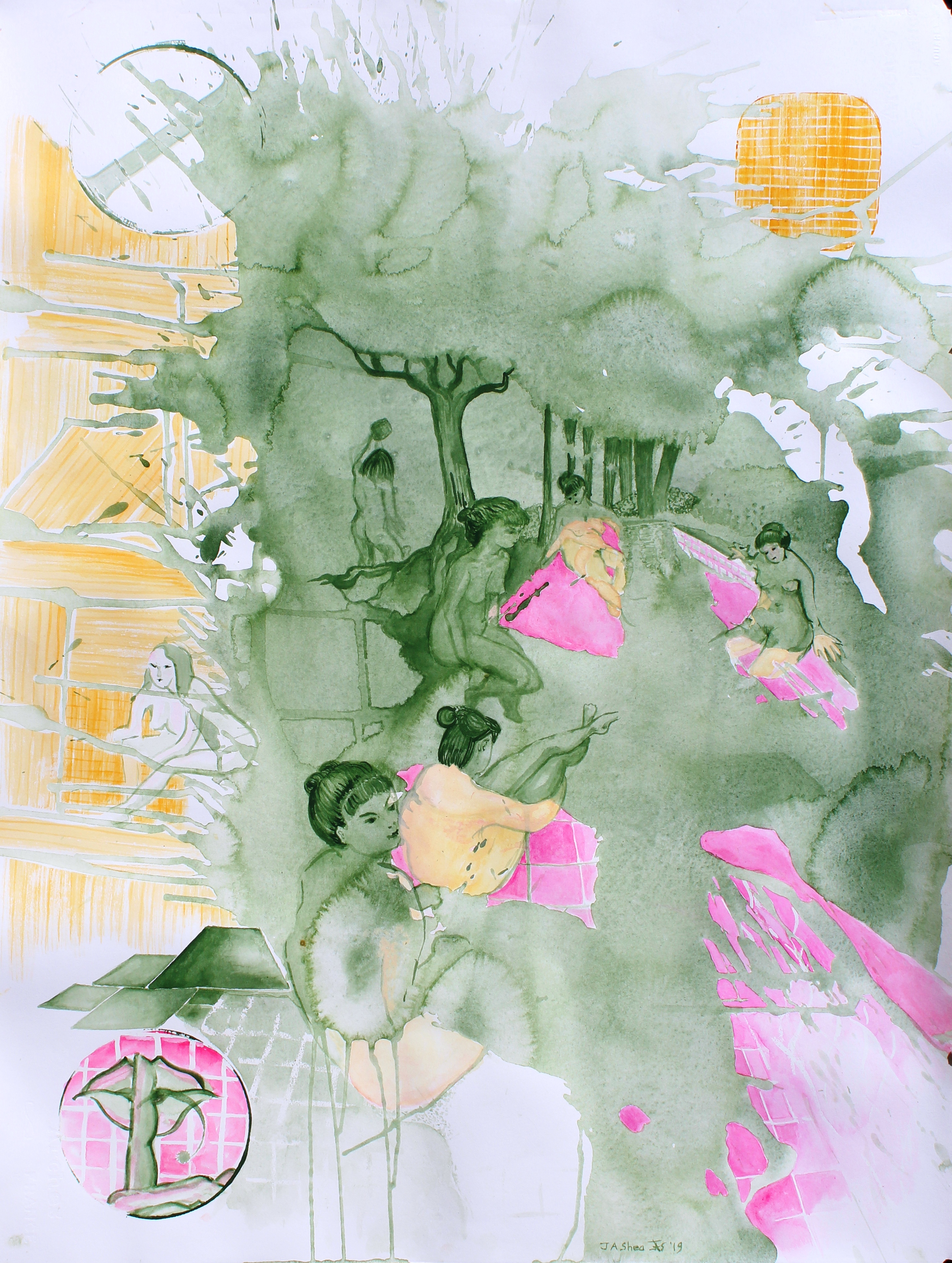
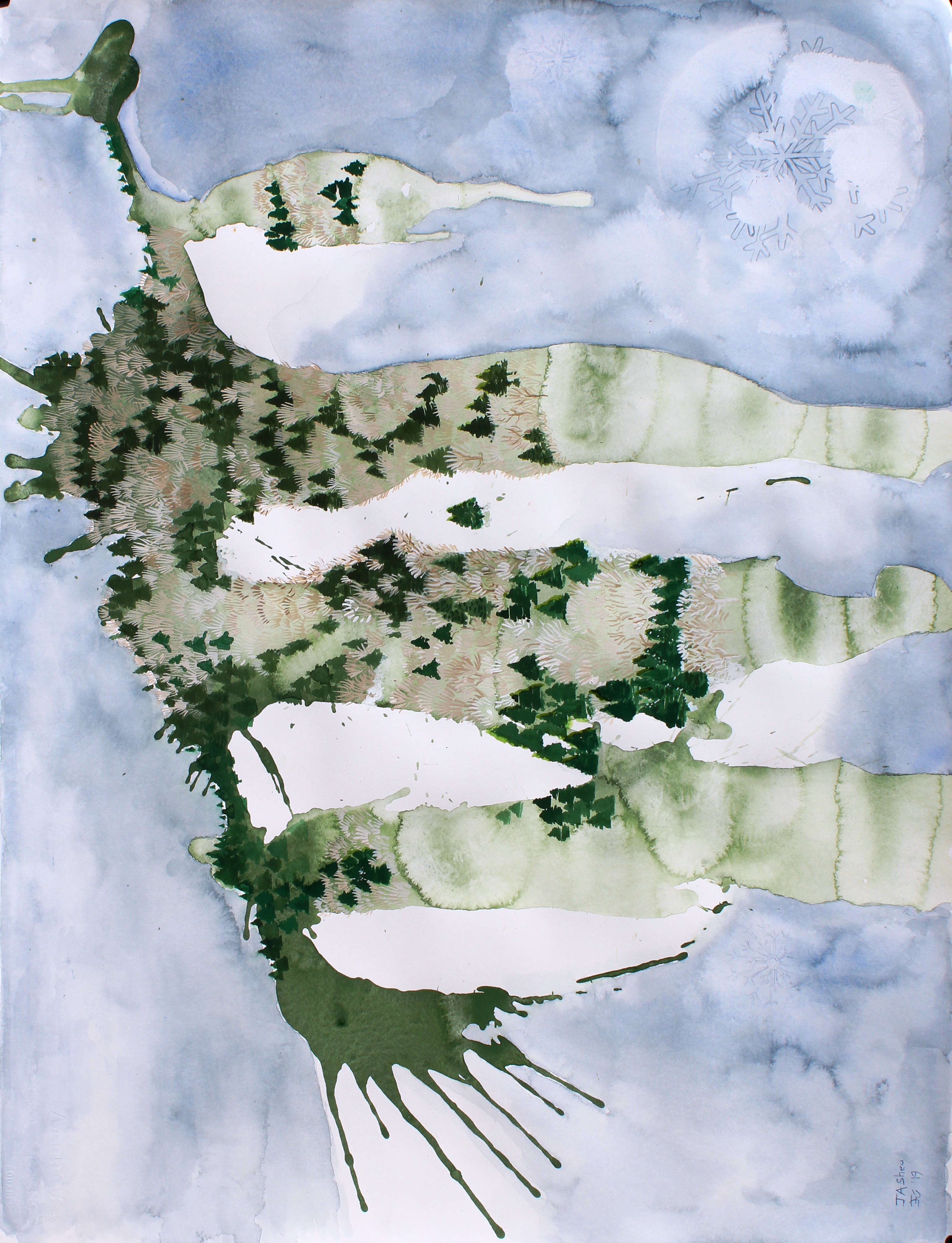
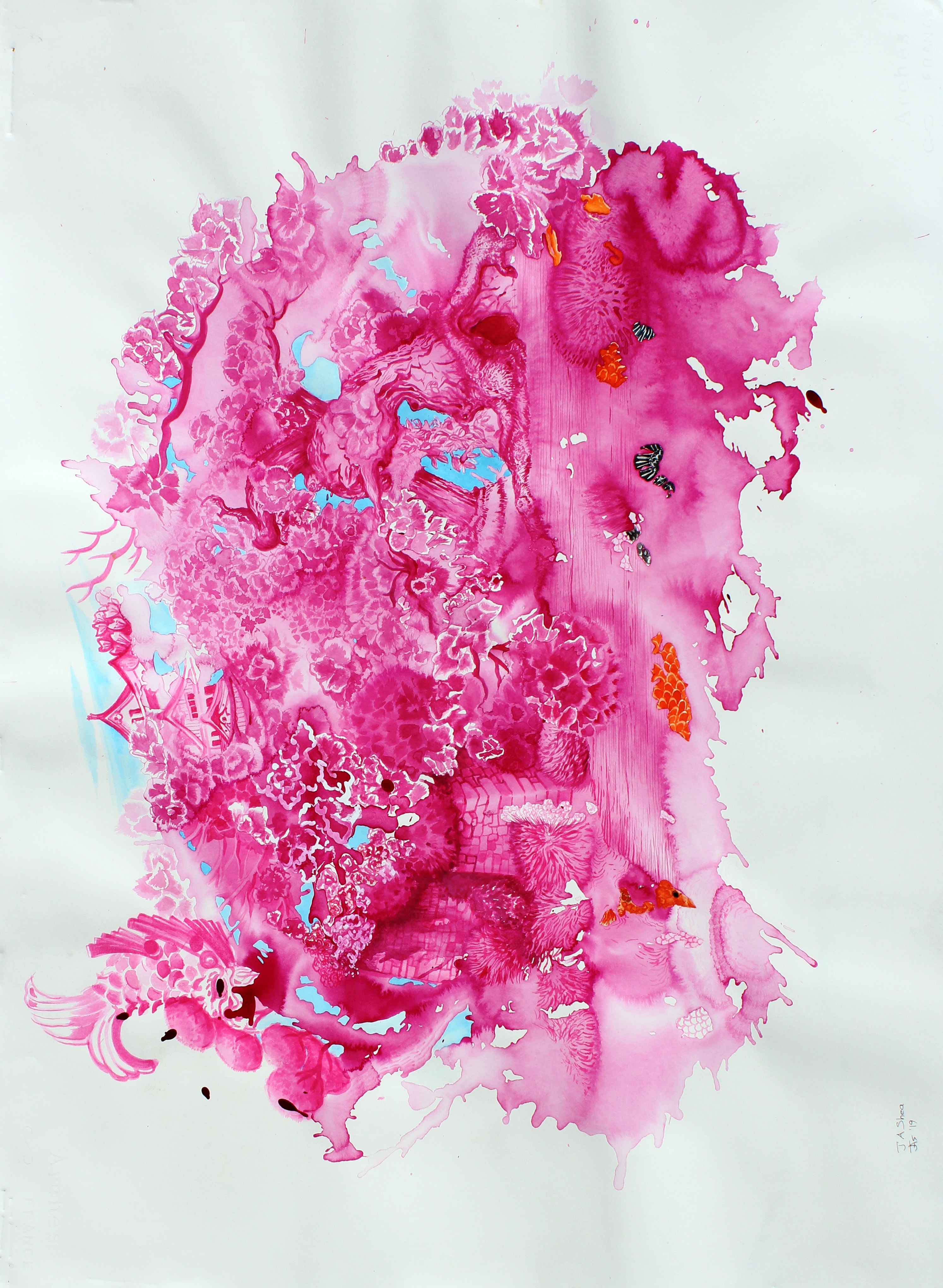
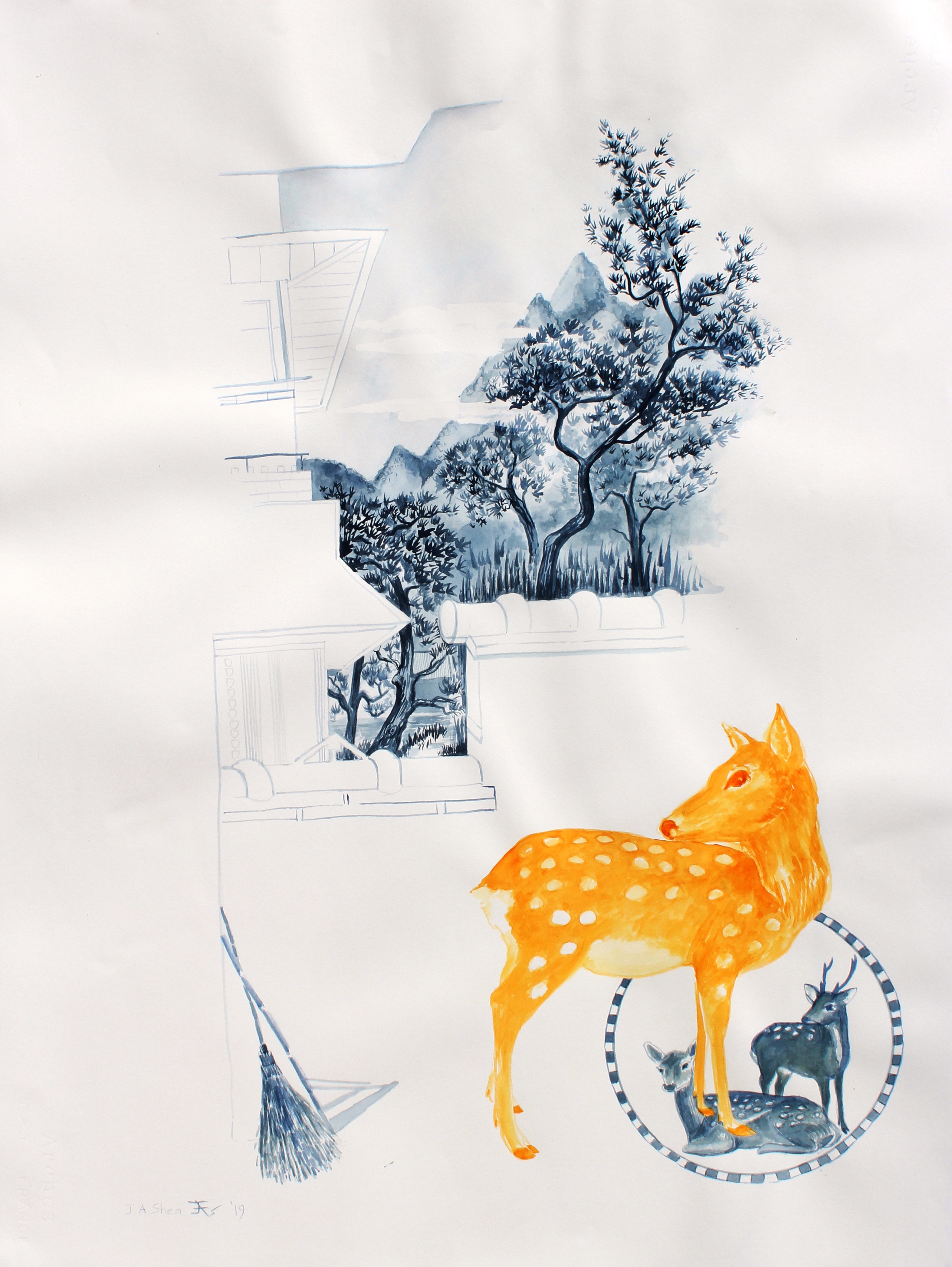
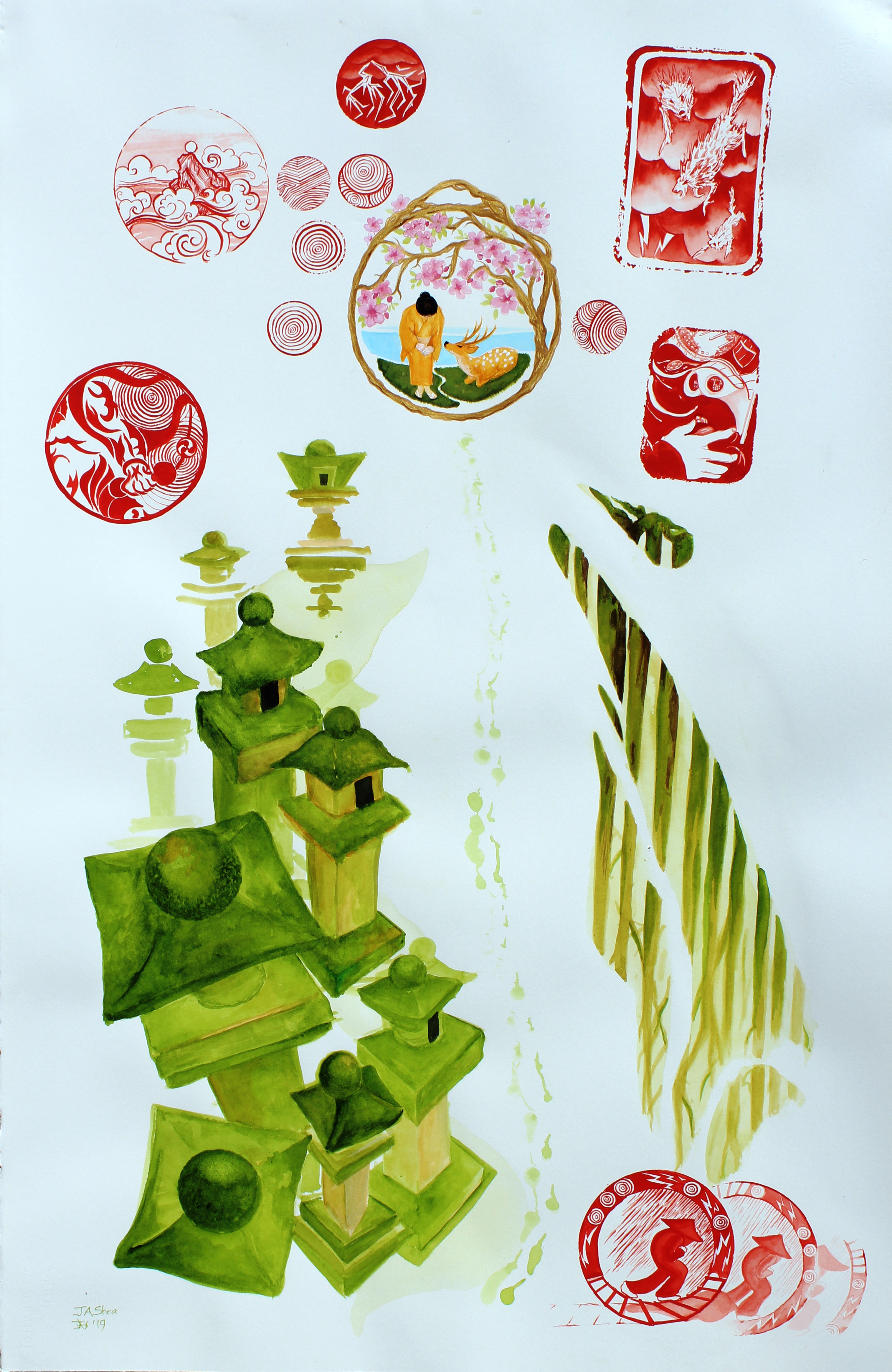
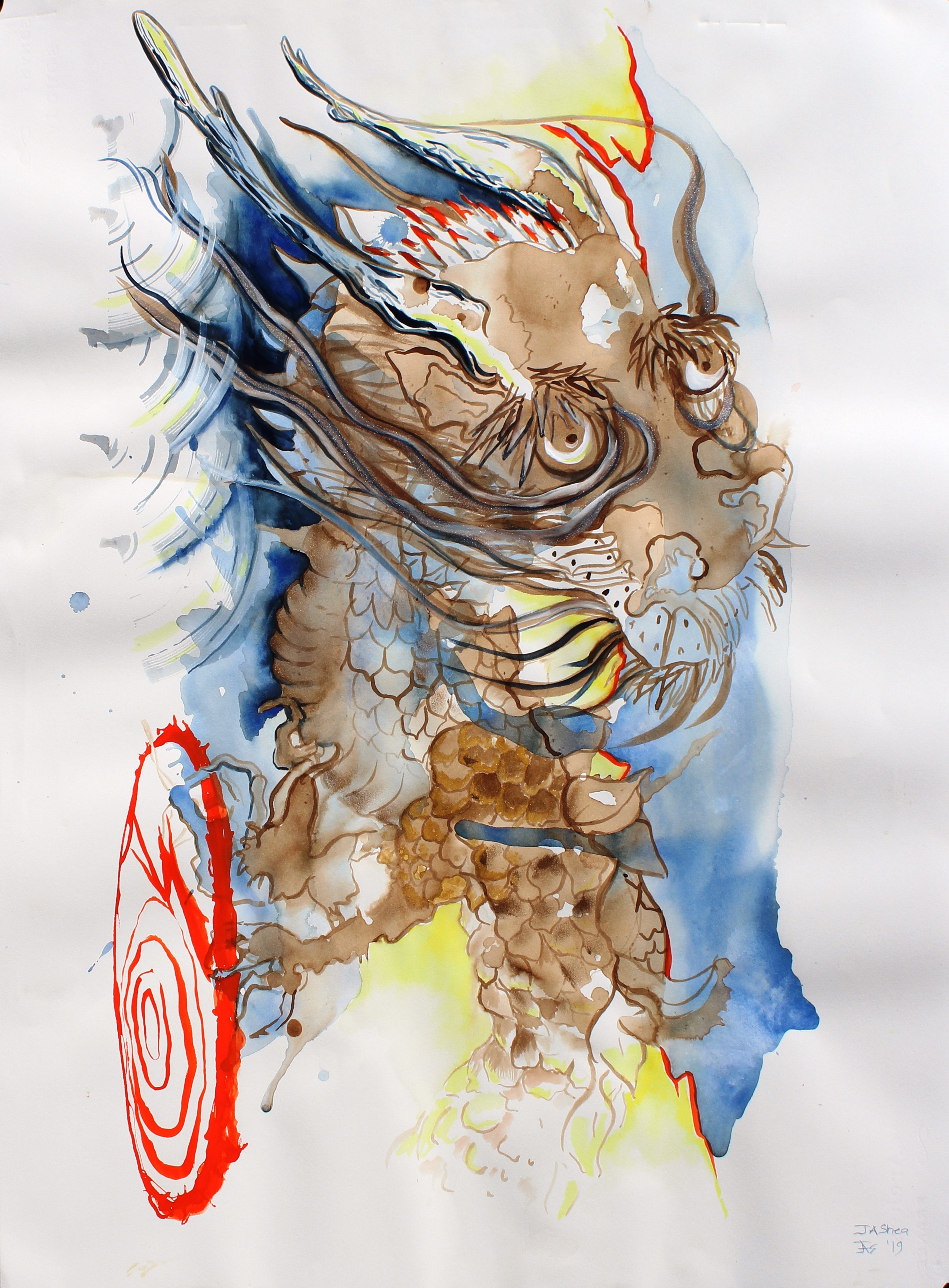
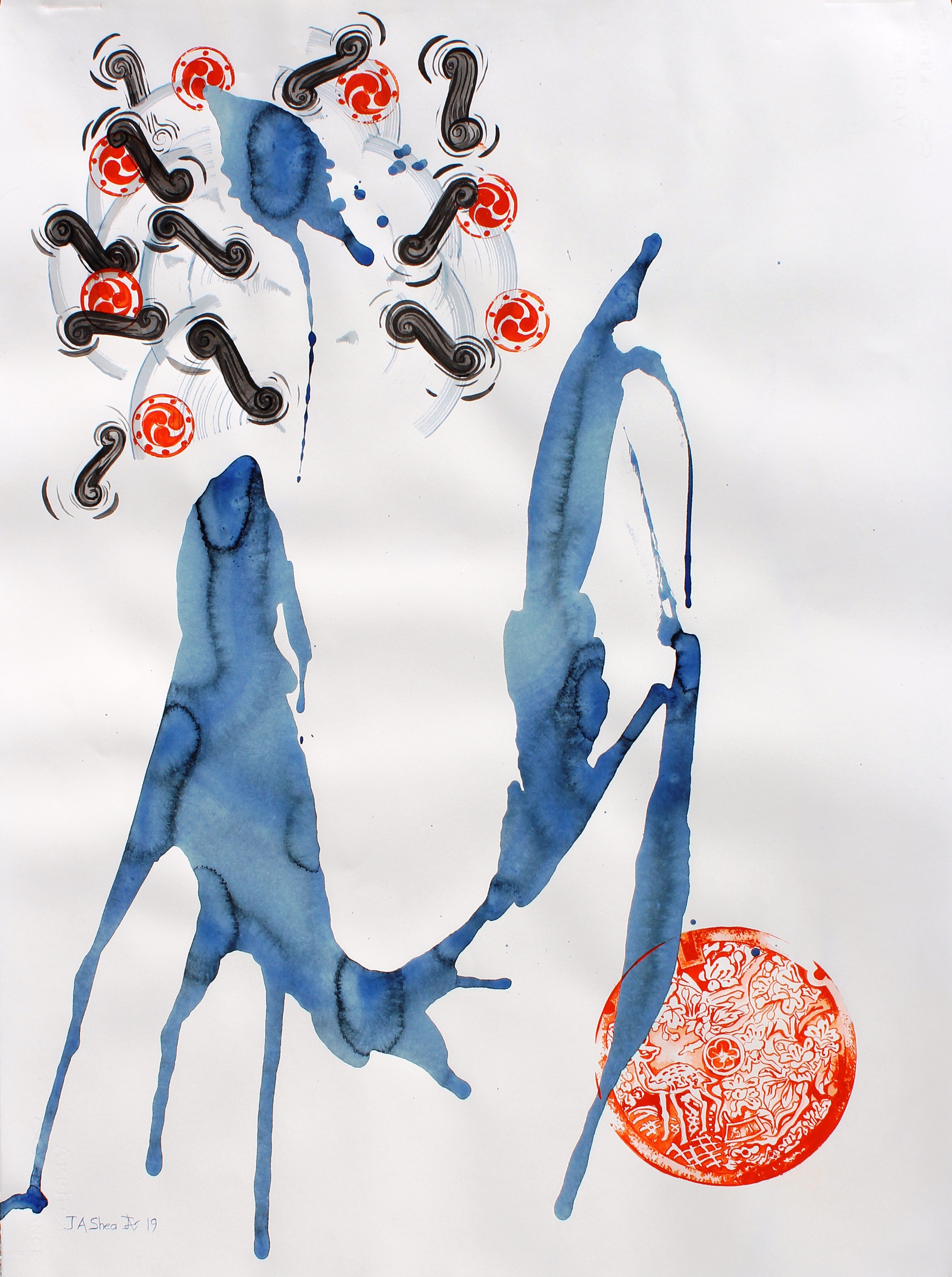
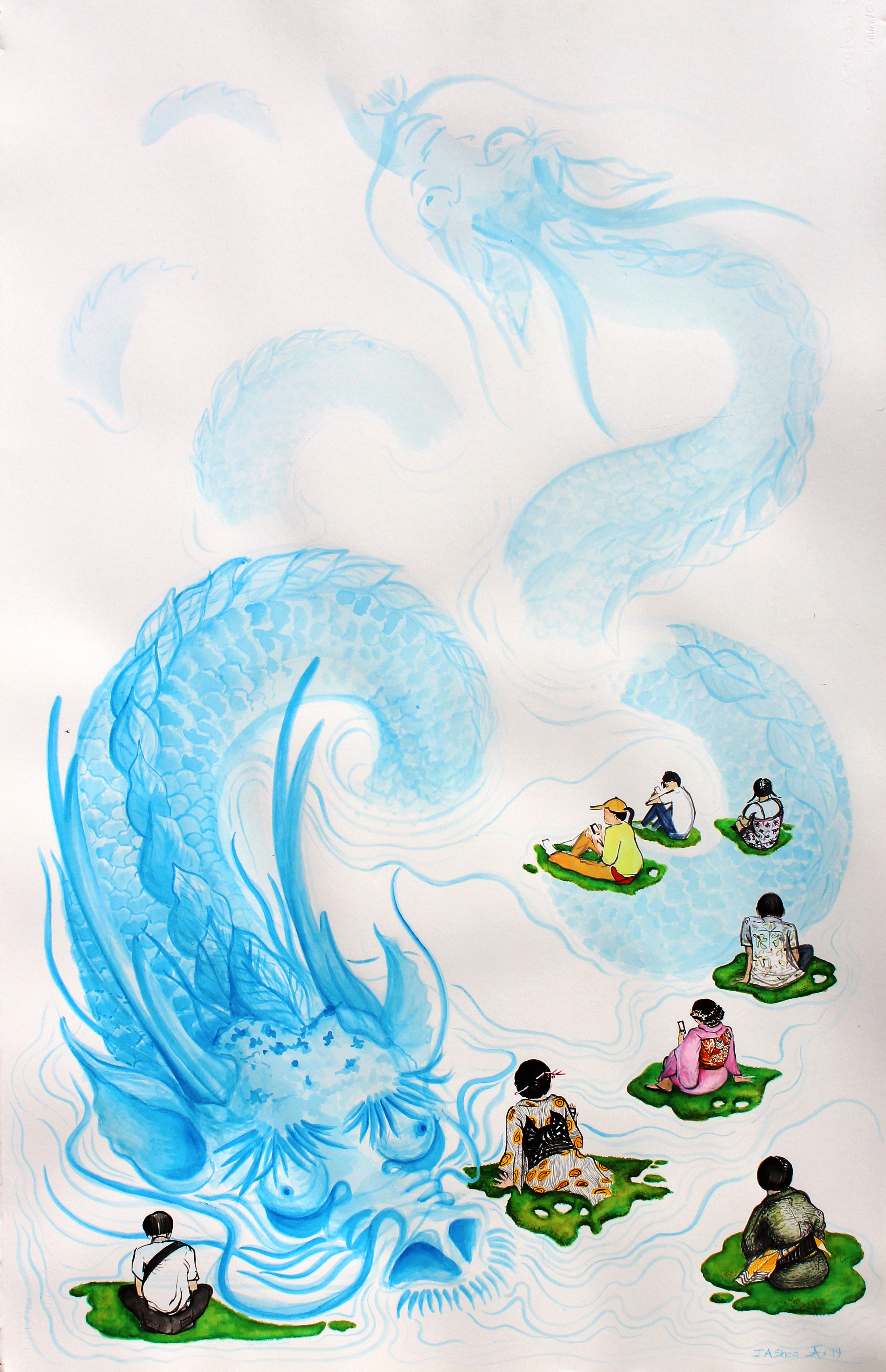
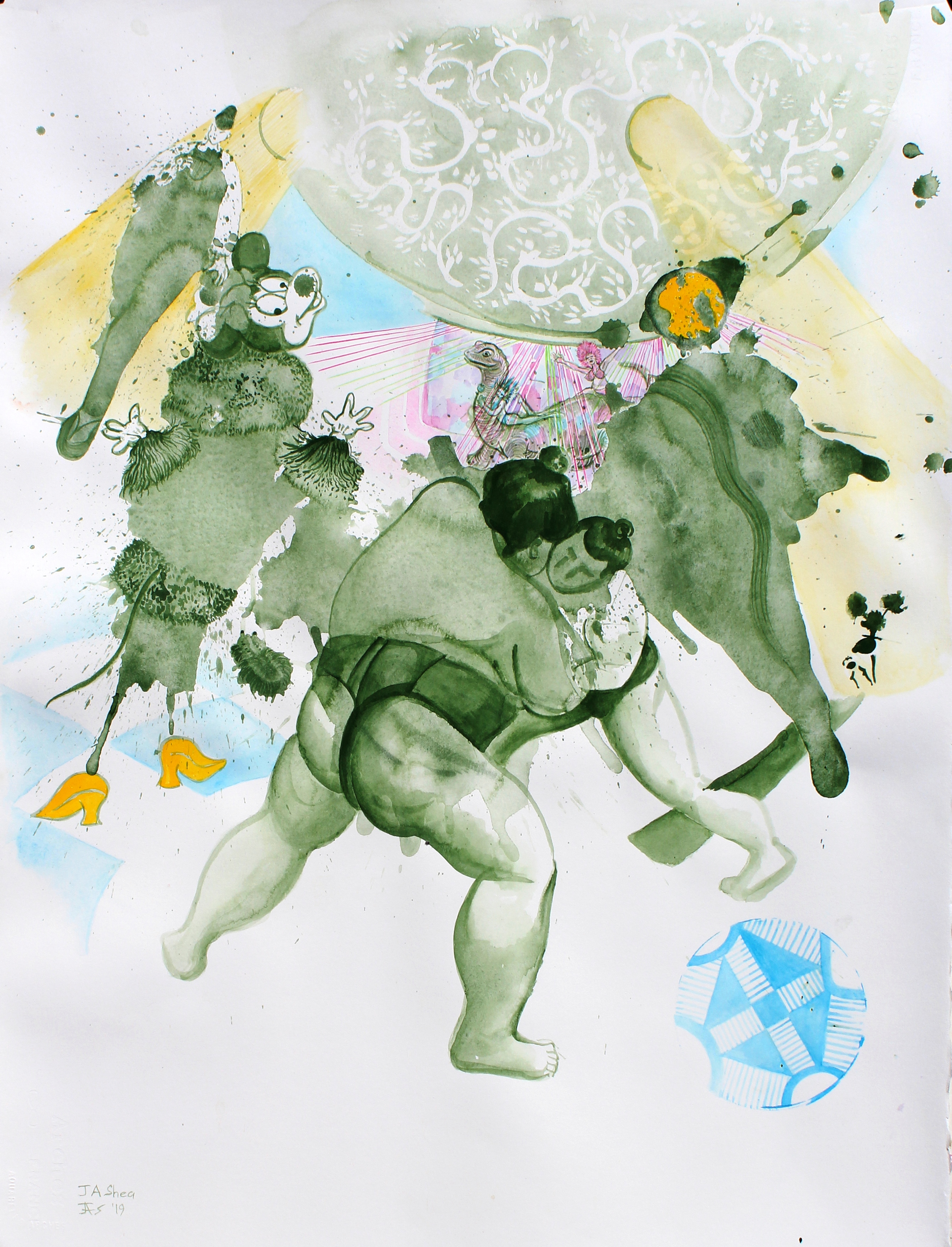
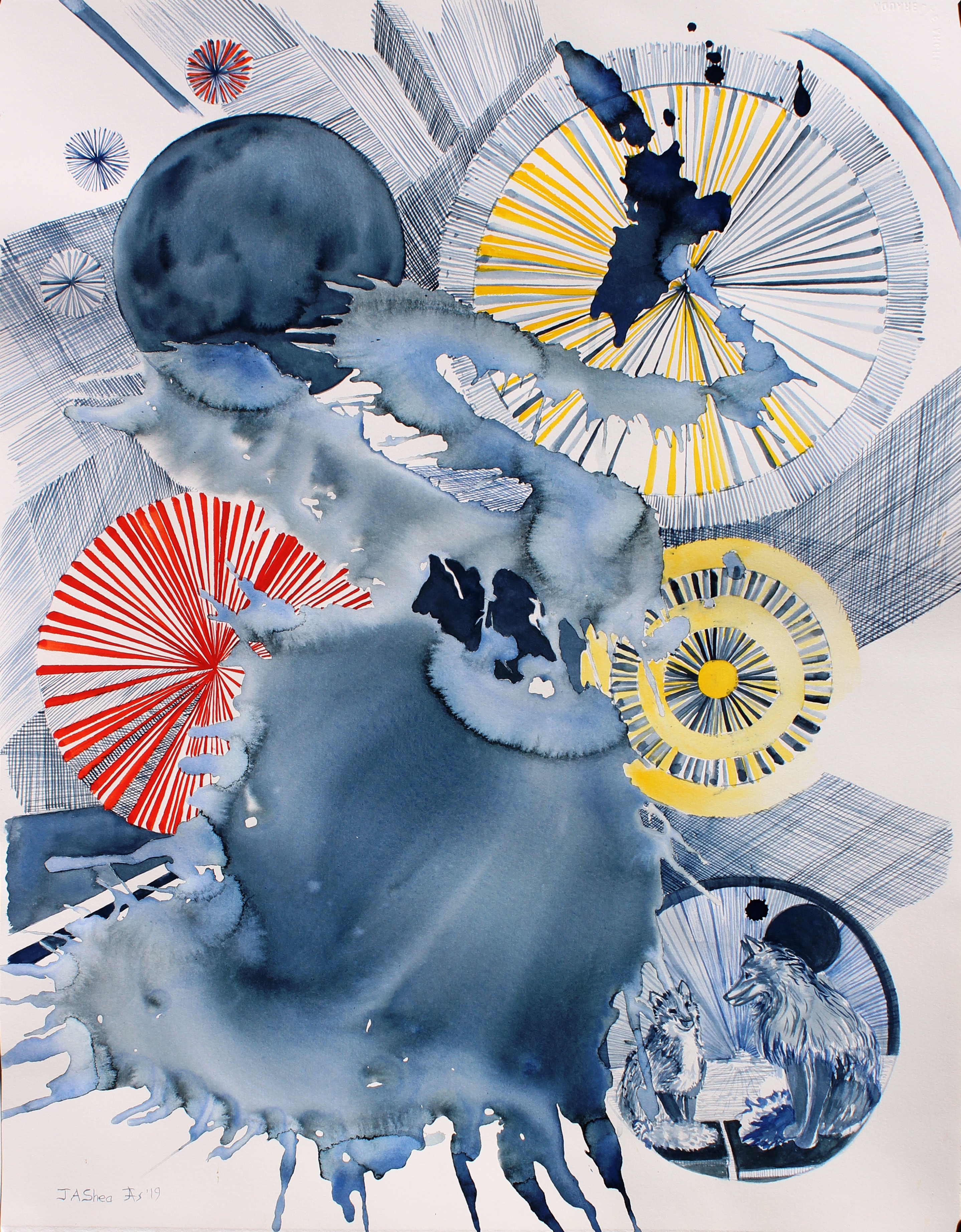
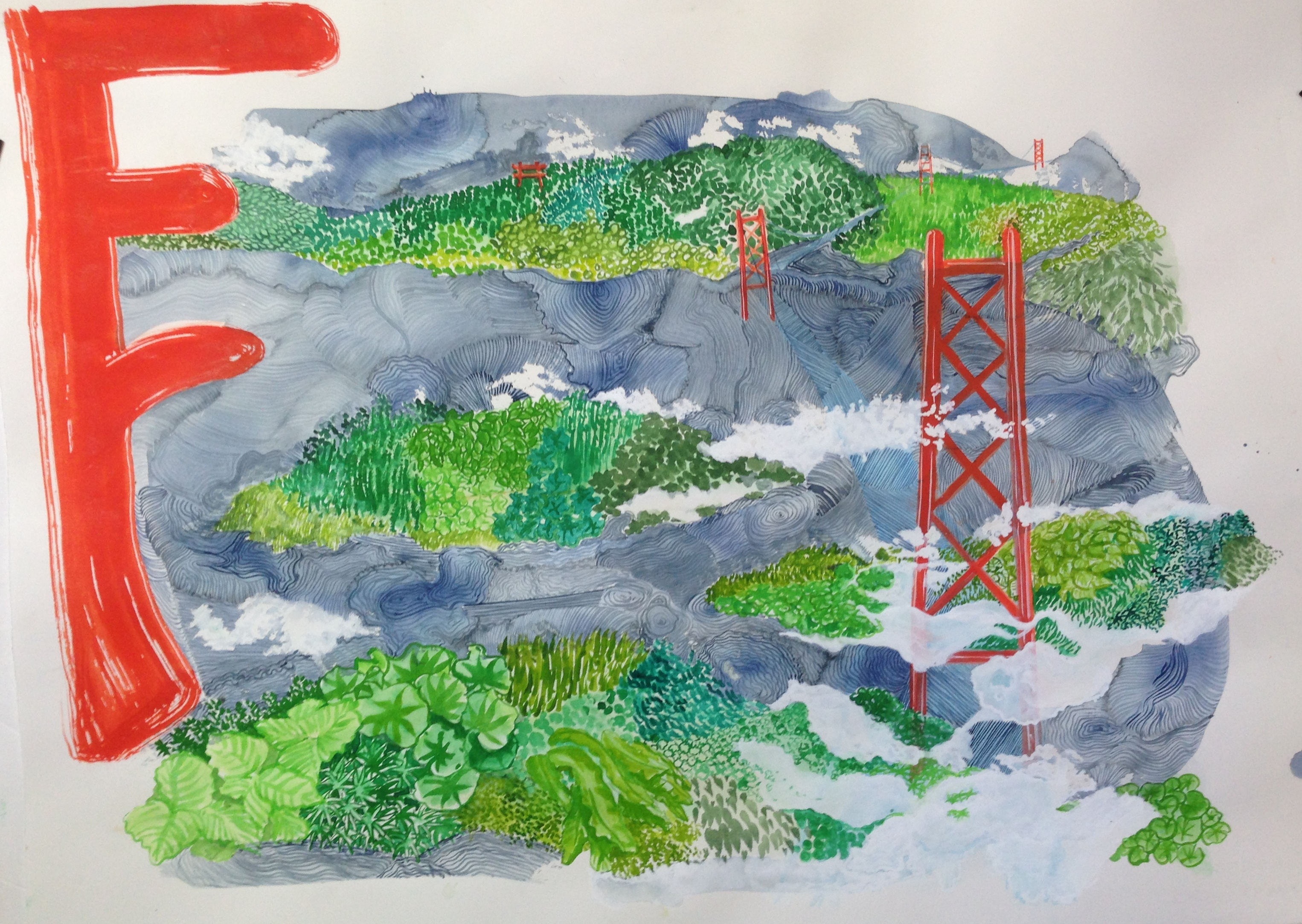
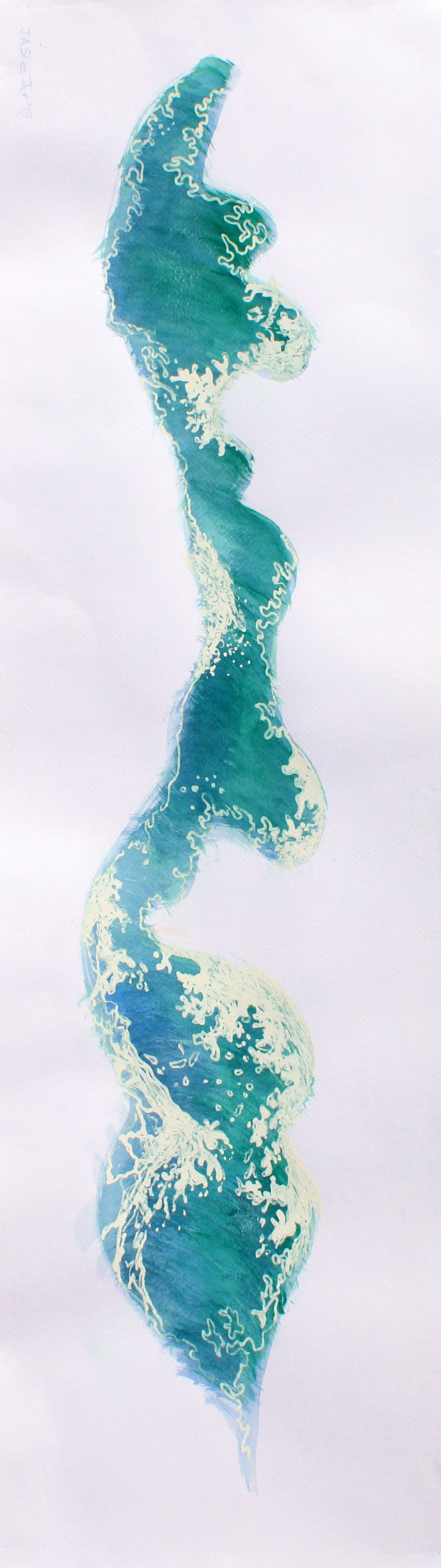
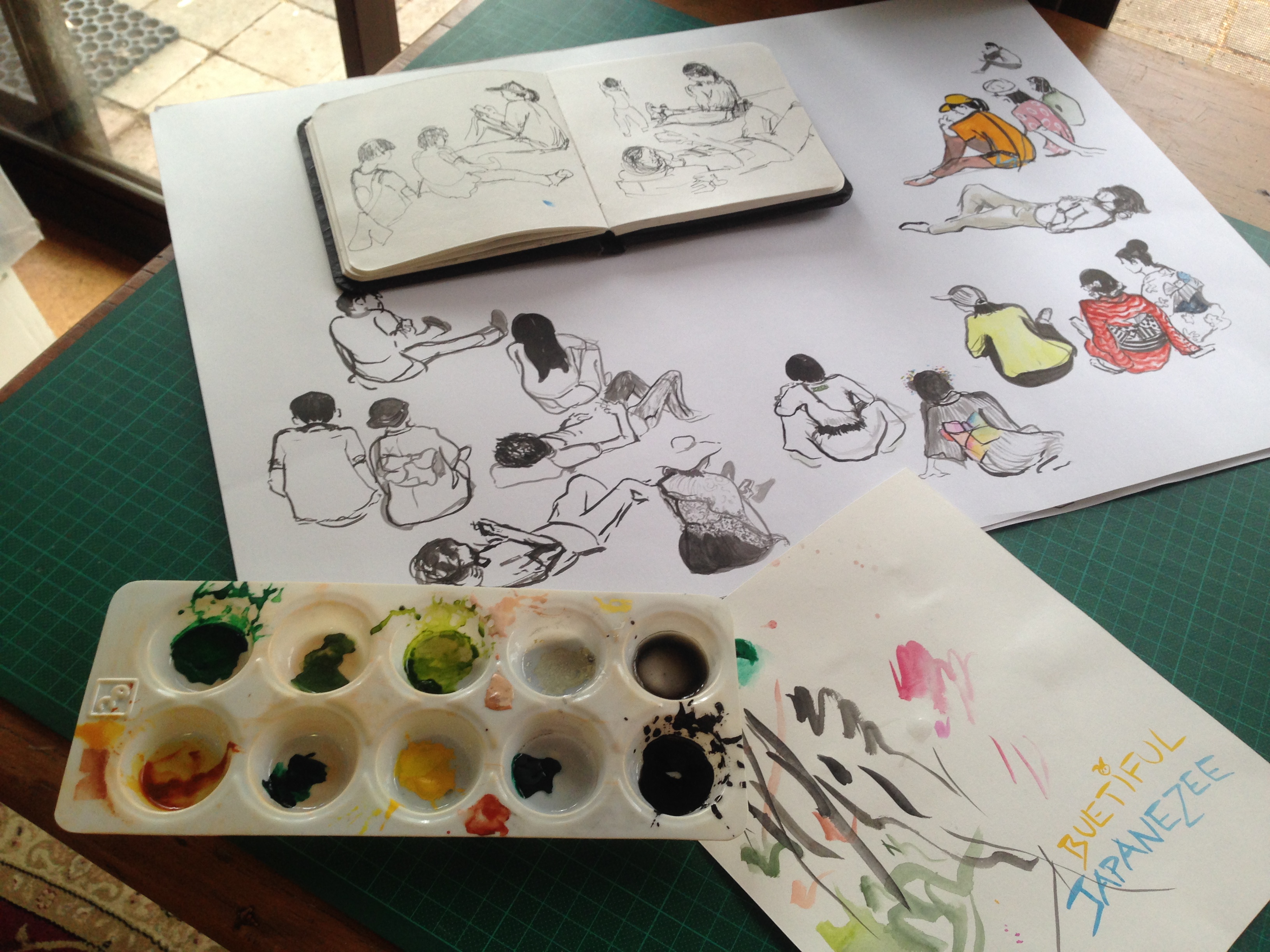
Her artworks in this Japanizi exhibition are drawings based around recent travels in Japan. They continue her experimental research of apophenia/pareidolia (finding form in nonrepresentational information, like finding animal forms in clouds) in 2d art making, and come from a process of submitting to and controlling concepts and practicalities of working with watercolours and ink on paper. Like the Japanese Hatsuboku way of ink-splash drawing, it is an attempt to connect with intuition, divine inspiration and serendipity in artmaking as a microcosm of life; to respond to the will of the world, and to make something visually sustaining from significant chaos.
“Arts task is to contribute to evolution, to encourage the mind, to guarantee a detached view of social changes, to conjure up positive energies, to create sensuousness, to reconcile reason and instinct, to research possibilities and to destroy clichés and prejudices.” Pipilotti Rist
Japanizi Floortalk Animism and Hatsuboku
I have been making artwork in the Macleay Valley since relocating here in 1989. I have a Bachelor of Visual Arts and Master of Cross Disciplinary Art & Design and long term practice of producing and exhibiting 2 and 3 dimensional artworks, as well as support roles to the local art industry including teaching, art supply retail, gallery curating, competition judging, art talks. I have a special interest in animism - the attribution of a living spirit, or spirits, to all manifestations of our existence – and the role of art as an animated medium.
Animism is defined as the attribution of a living spirit, or spirits, to all manifestations of our existence. The spirits animate and organize humans, animals, plants, objects, natural and manmade systems. It implies that the universe is a living entity with vitality, a soul or spirit(s), as well as the familiar physical and conceptual manifestations through which we experience our existence. The term was initially based on the concept of “anima mundi” or the world soul – the idea that every living thing on our planet is intrinsically connected as a single living entity, a concept which was speculated upon by Plato in his dialogue “Timaeus” in 360 BC.TT The perception that spirit resides in everything is said to be the foundational matrix giving rise to all religion, and aspects of animism are expressed in Buddhism, Hinduism, Jainism, Neopaganism, and Shinto. From the point of view of animistic cultures, this spirituality is such a fundamental part of perception that it is not usually named.
As an anthropological construct, the term “animism” was introduced by English anthropologist E. B. Tylor, which he defined in “Primitive Cultures” in 1871 as the theory of the universal animation of nature where spirit pervades life. Tylor explained primitive religions in terms of a spirit that animated the material world. Places and objects took second place to the spirit that inhabited them – the objects themselves not being powerful. The relationship between the material world and subjective spiritual experience was a popular issue of debate in anthropology at the time questioning where agency lies – in the object itself, the relationships to the object, or surrounding the object? Tylor understood the spiritual and the material as being separate, and thought that primitive people had mistakenly conflated them. (Collins, 2015)
Tylor’s own interpretation of the indigenous cultures of which he wrote from afar was, unavoidably, coloured by his own entrenchment in a 19th Century Western paradigm. As anthropology became accepted as branch of Science, his description of tribal cultures as being “low on the scale of humanity” (Collins, 2015), and his judgment of their spiritualism as being unscientific, irrational and erroneous, consequently undermined respect for the spirituality permeating these ancient cultures.
In the 1850’s an interest in spiritualism had spread from America to Great Britain where it was popular with many in the middle and upper classes who attended séances and consulted mediums. Tylor, complying with the concept of individual accountability to God in a Christian society, viewed magic as something to be removed from society t, hough he had found it interesting, investigated séances, and consulted mediums himself.
Later, Freud described animism as a form of narcissism where we project our consciousness onto the external world. These “mistaken realities” could be cleansed of our superstition and idolatry, our projections separated out, all non-linguistic communication, our emotions, our imaginations and our irrationality dealt with by psychology. Freud’s theories confined the animist spirit within the community to an elite few - the Artists - who have privileged access to the processes of animism, the “subconscious”, the muse, and genius, though it is removed from the collectivity of life and seen as subjective, fictional and inconsequential.
In the rituals of animistic cultures, Shamans have direct contact with spirit, acting as conduits between humans and the spirits to give clarity to the wishes of the spirits. Contemporary Shaman artists join doctors, gurus and church leaders to fill this spiritual leadership in society.
Shinto is the traditional religion of Japan, and animistic belief is so deeply embedded into the culture of contemporary Japan that it is held in common attitudes and ideas without being spoken of (Kitatno, 2007). Spirits are worshipped in the home, at specific shrines, in rituals and festivals, and the faith is transmitted from generation to generation as a way of life. Kami, or sacred spirits, include qualities such as fertility and growth, natural phenomena such as wind, natural objects such as mountains and rivers, animals, ancestral spirits, guardian spirits, skills, and outstanding individuals. They are seen as superior to humans, and they function in harmony and cooperation with each other, and this is their teaching. Shinto, or the Kami-way, is an amalgam of attitudes, ideas, and ways of doing things to achieve earthly, community and personal harmony. (Ono, 1962)
Japanese robotists have the optimistic expectation that robots will safely and harmoniously fit into society due to an intrinsic cultural belief in animism where tools are considered to be extensions of their owners and harmonise with their owner, in comparison with the idea of the subjectivity of the Western robot. “Rinri”, or Japanese ethics, studies community and how to achieve harmony in human relationships. Animism and rinri together underlie the character of Japanese attitude to robotics constructing and limiting the “ningen”, or in-betweeness, as the robots have identification only as they are in use. Technological advancement overlays ancient spiritualism in a comfortable collaboration. (Kitatno, 2007).
Buddhism was introduced in Japan in the 8th century and Zen Buddhism was introduced as a separate school in the 12th century. Reminiscent of the (428 - 347 BC) Platonic view that creativity is divinely inspired, Zen advocates the removal of self to attain “direct intuition of the essential unity of man with the world”, and this has helped shape the art of Japan. In Sumi-e painting, any separation between inspiration and brushstroke leaves a gap that would prevent spirit entering the painting. Shapes produced by a wash of ink on scrolls reveal the spirit of life to the viewer. “Poor reason and personal will” is bypassed as the artist uses the heart as an instrument of the Universal Unconscious, letting the spirit run through it. When the vision is inspired by the ink splash the technique is known as Hatsuboku, and scene can be partly or wholly depicted by the artist. The viewer uses intuition to complete the vision made material by the artist (Lemiere, 1959). This gap in description allows the viewer to overlay their own perceptions and mindsets to the artwork allowing them to be part of the process joining divinity to earth.
In the same way, Leonardo da Vinci noted that stains and spots on any walls can help with invention of scenes as they resemble landscapes with features such as mountains, rocks, rivers and trees. The experience is familiar to us in the recognition of objects suggested by the form of clouds. This phenomenon is known as pareidolia, apophenia or patternicity
I have used a method similar to Hatsuboku to prompt imagination, and to find or force imagery relating to the locations in Japan visited and the myths, memories and symbols as referred to in the artwork titles. This is a process of submitting to and controlling ideas and various practical aspects of working ink and watercolour on paper. It is an attempt balance intuitive and reasoned thinking and to be open to divine inspiration and serendipity in artmaking as a microcosm of life; to respond to the will of the world, and to make something visually sustaining from significant chaos.
Also serendipitously at the beginning of making the artworks for Japanizi, I was given a copy of “The Unknown Craftsman: A Japanese Insight Into Beauty”, by Soetsu Yanagi - which describes the beauty of the unaffected art produced by Korean craftsmen. He says “By and large, good pattern is of communal parentage. The more so the better, and the further the disciplines of nature are accepted the better the results will be……our undertaking as craftsmen is to act as humble and loyal agents of the divine will inherent in nature”.
*Previously been experimenting with pareidolia and became aware of the surprising ability we have to be able to transform any chaotic marks into an orderly pattern…..Scissors Rock Paper images fitting astonishingly closely onto the splattered ink on the background…..tested the theory by predetermining to find a white lion in a blob of ink….took a couple of days, finally found it…….. Experiment with messy white paint on black backgrounds made by 3 kids, and random words provided by friends systematically objectively ordered then put into groups of three and applied to the backgrounds to produce artworks…….Made larger drawings with written instructions (chosen and random phrases) visible underneath the first layer of ink to indicate that the imagery was suggested/established before the following layers were created…….the serendipitous outcomes of the process feels magical.
“Arts task is to contribute to evolution, to encourage the mind, to guarantee a detached view of social changes, to conjure up positive energies, to create sensuousness, to reconcile reason and instinct, to research possibilities and to destroy clichés and prejudices.” Pipilotti Rist
References
Collins, S.G. (2015). Networked Spirits and Smart Séances: Aura and the Anthropological Gaze in the Era of the Internet of Things, History and Anthropology 26:4, 419-436, DOI: 10.1080/02757206.2015.1072528
KITANO, N. (2007) “Animism, Rinri, Modernization; the Base of Japanese Robotics” Graduate School of Social Sciences, Waseda
Lemiere, A. (1959) Japanese Art from Sesshu to the Ukiyo-ye School. London: Methuen and Co
Ono, S. (1962). Shinto: The Kami Way. Tokyo: Charles E. Tuttle Co, Inc
Yanagi, Soetsu (1972) The Unknown Craftsman:A Japanese Insight Into Beauty. Published January 15th 1990 by Kodansha