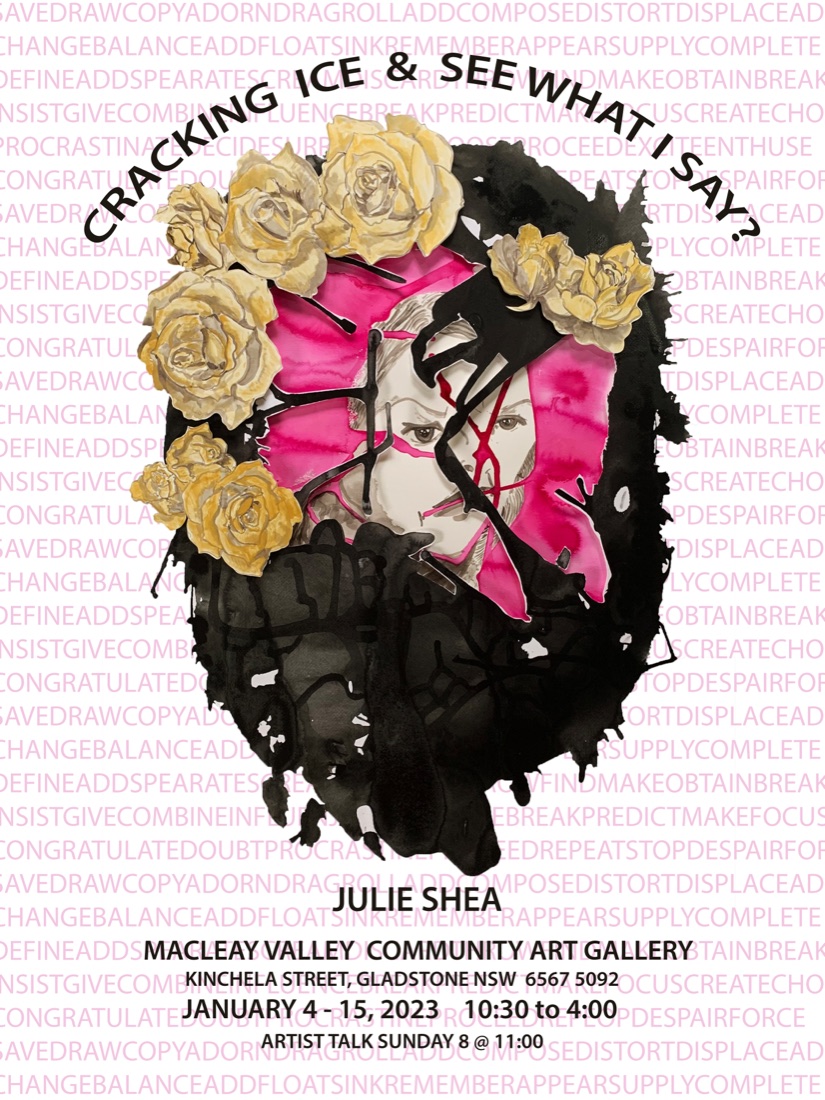
Cracking Ice
January 4–15, 2023 — Macleay Valley Community Art Gallery, Gladstone NSW
Exhibited with See What I Say?
How frozen I became and powerless then,
Ask it not, Reader, for I write it not,
Because all language would be insufficient.
I did not die, and I alive remained not;
Think for thyself now, hast thou aught of wit,
What I became, being of both deprived.(Dante: Divine Comedy, Inferno: Canto XXXIV, where Dante and Virgil have reached the centre of frozen Hell and people are immobilised in ice.)
Cracking Ice describes the artist searching for release from a stubborn lethargy. Traditional drawing, Dada techniques, sporadic accidents, recombining, collages, apophenia, whims and contrivances are used to escape the solidity of procrastination and indecision known as “creative freeze”. Unexpected outcomes illustrate the process of a slow thaw, and direct the intuitive flow that is initiated.
Procrastinate…… make a decision — impulsive or deliberate…… surrender to decision…… choose materials…… choose process…… proceed freely…… excitement…… enthusiasm…… congratulate self…… doubt self and decisions…… procrastinate…… repeat steps
Usually my creative process goes something like that. Until it stopped. And then there was nothing. No thoughts, no desires, no reason. Despair.
Solution: force action.
1. Saving Flowers
Feel relief seeing flowers — escape into the perfect forms, colours, scents, ephemerality. Draw flowers from life, moving my view point, using ink and brush on paper.
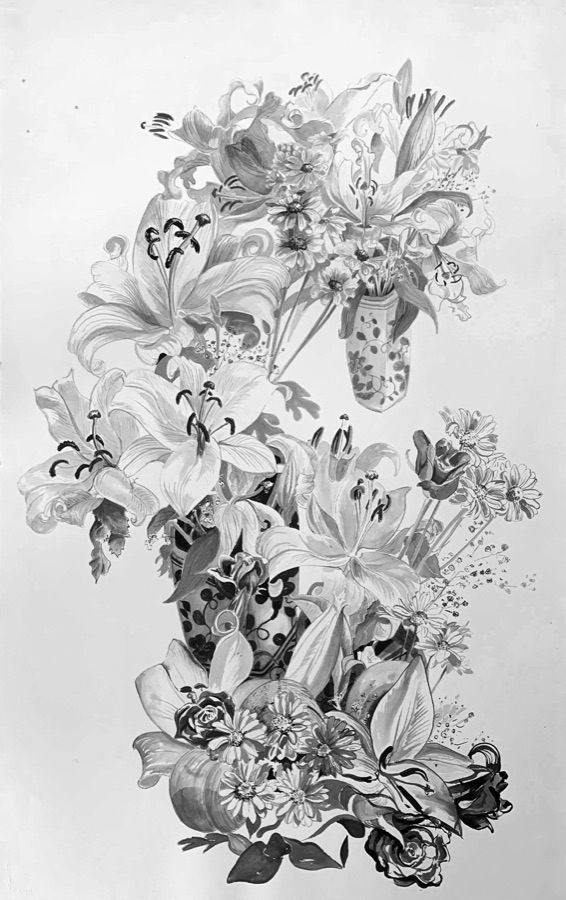
ink on paper, 101 × 67 cm
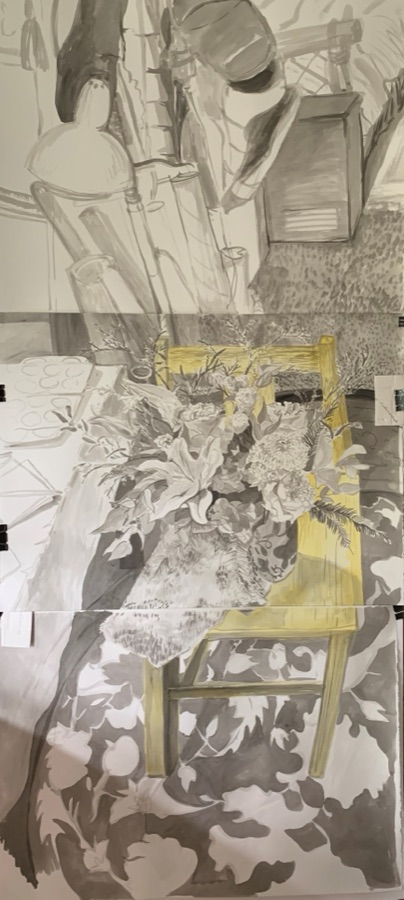
ink on paper, 160 × 76 cm
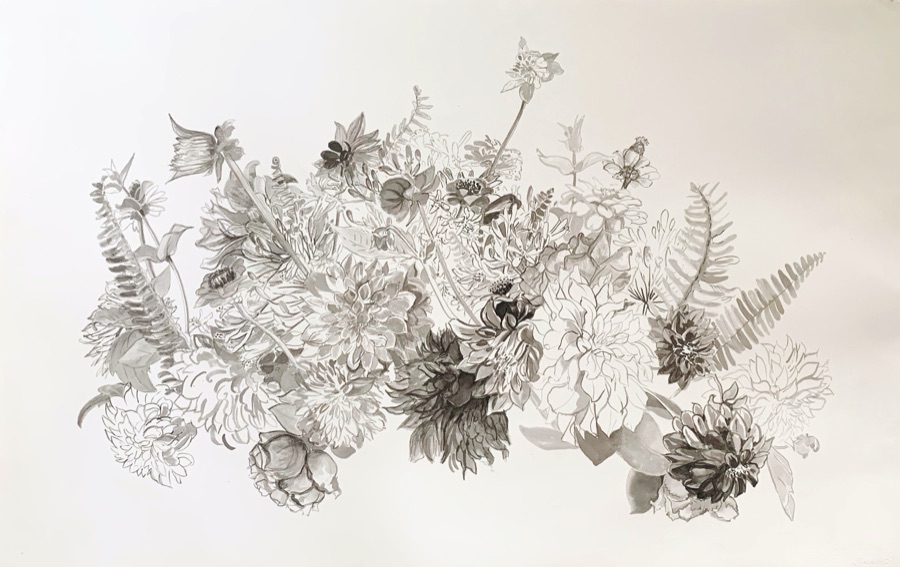
ink on paper, 67 × 101 cm
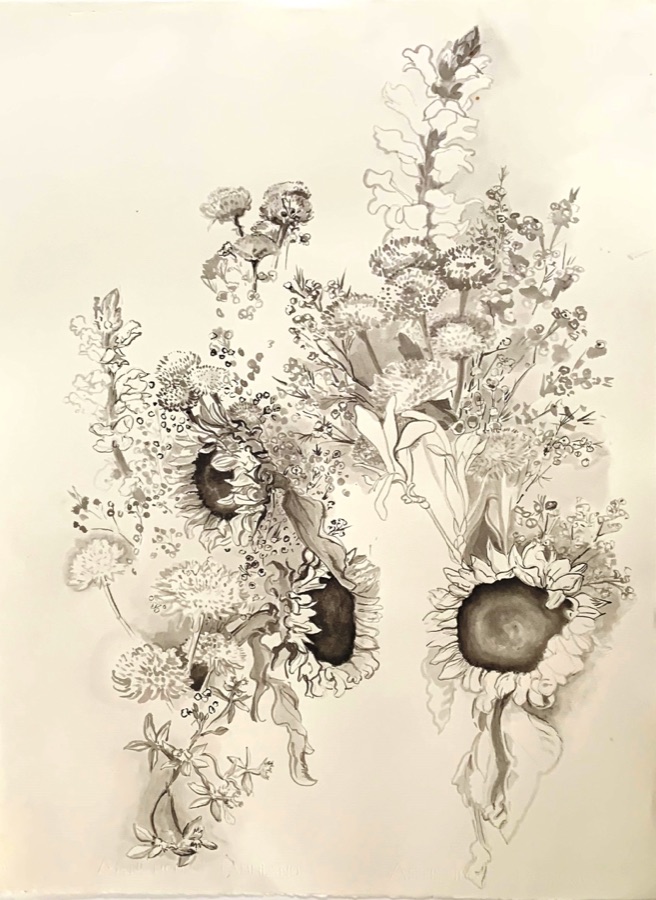
ink on paper, 76 × 56 cm
2. I Don’t Like You But I Love You (Omega/Love)
I copied Michelangelo’s baby Jesus from Doni Tondo
adorned with flowers from my garden
added my self-portrait behind
a dingo rolling on its back
compositional decisions — an oval and a circle
dog pisses on distorted doni tondo
Vitruvian man’s head is displaced by a flower
change circle to Omega symbol
balance tonally
add gum flowers that look like corona virus
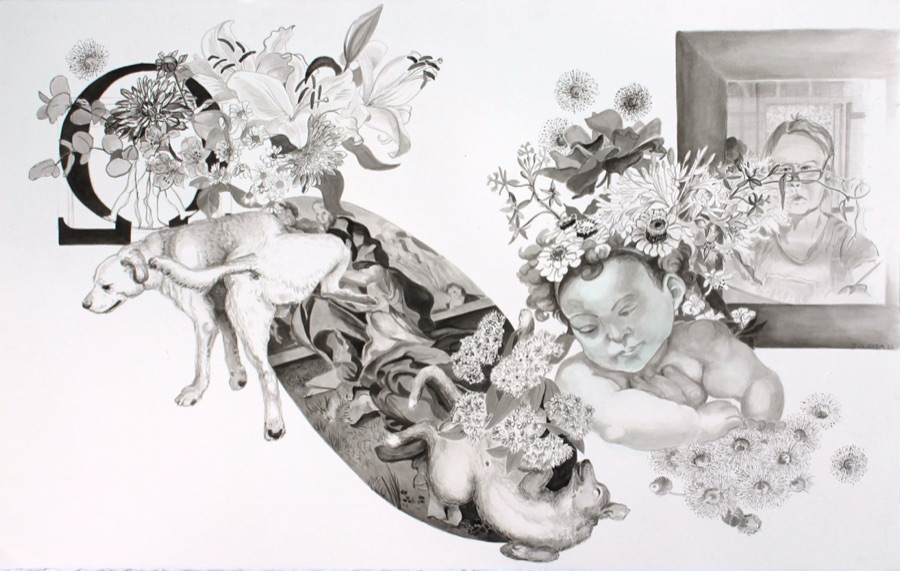
ink on paper, 67 × 101 cm
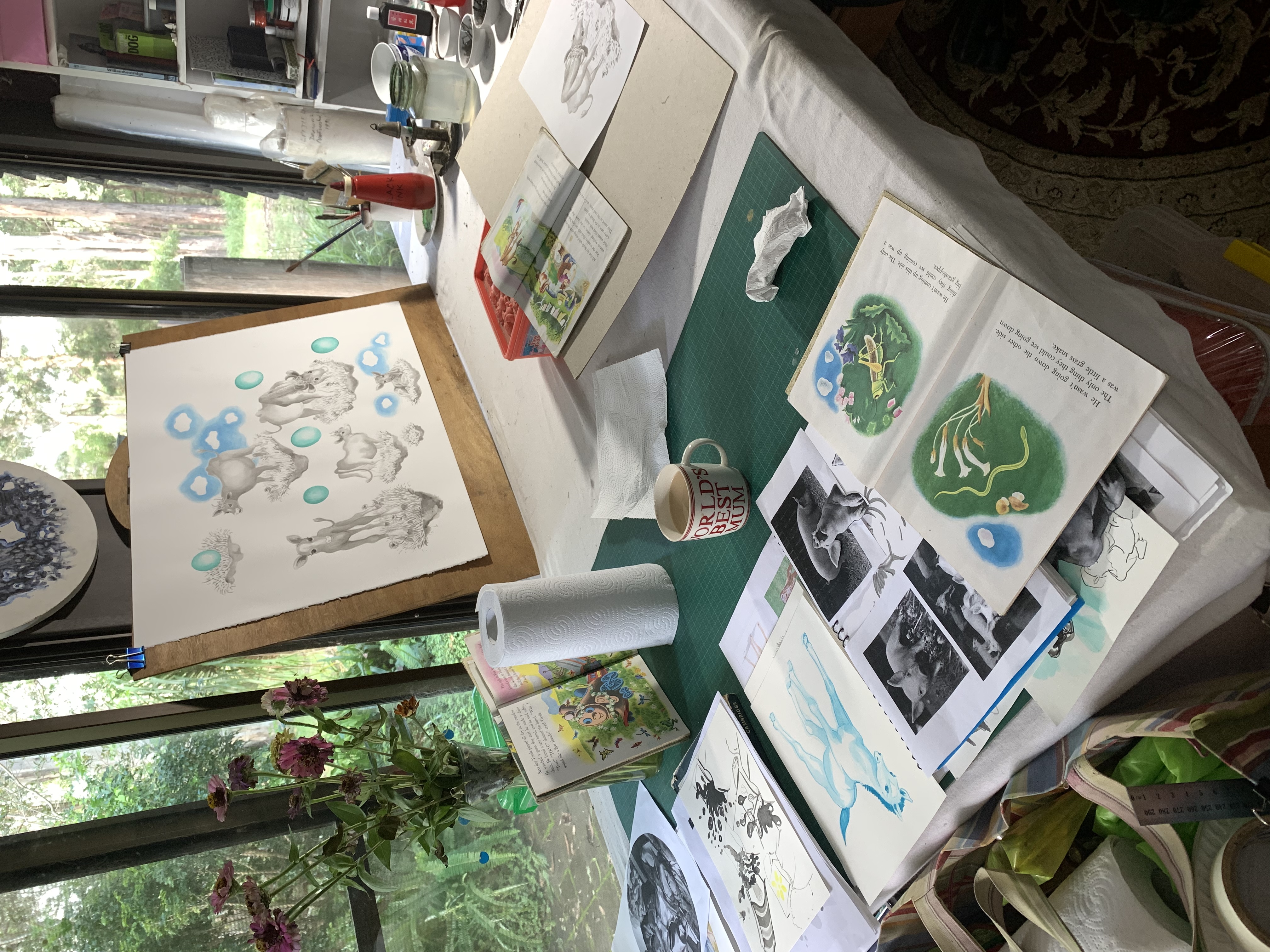
3. Floating and Sinking with Tibor Gergely
Remembered favourite story book illustrations from childhood.
Tibor Gergely was a Jewish immigrant to the USA from Europe on the brink of WW2. He worked as an illustrator for Little Golden Books bringing to life best-selling children’s stories such as Tootle, The Little Red Caboose, and Scuffy the Tugboat. He painted his landscapes and characters in an unconventional style. From Scuffy the Tugboat I took the images of the flooded river and added my own distressed characters, and also the cows which float on islands of earth; from Tootle I drew the little train exploring off the tracks and added my own face onto the wayward engine, tormented by mosquitos.
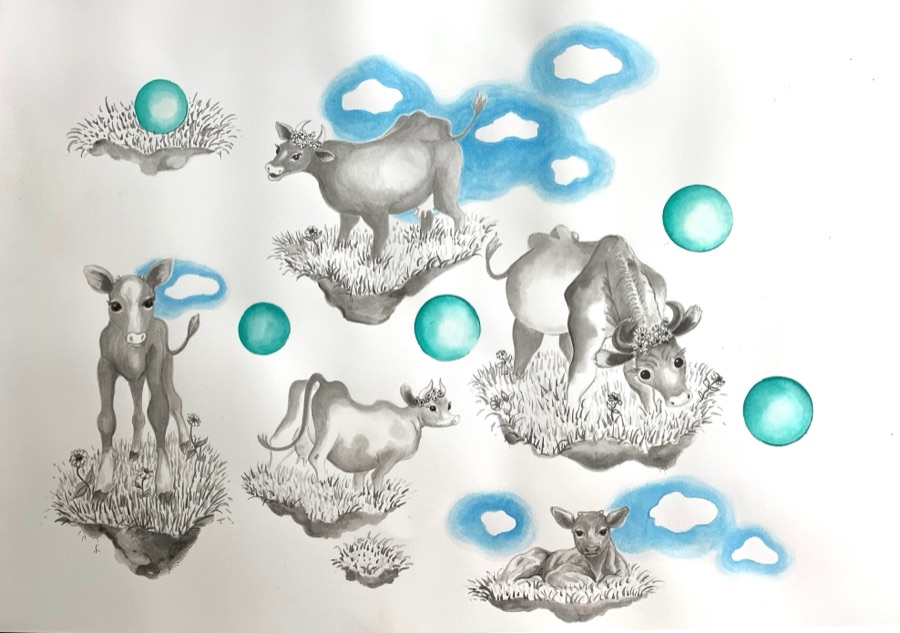
ink on paper, 56 × 76 cm
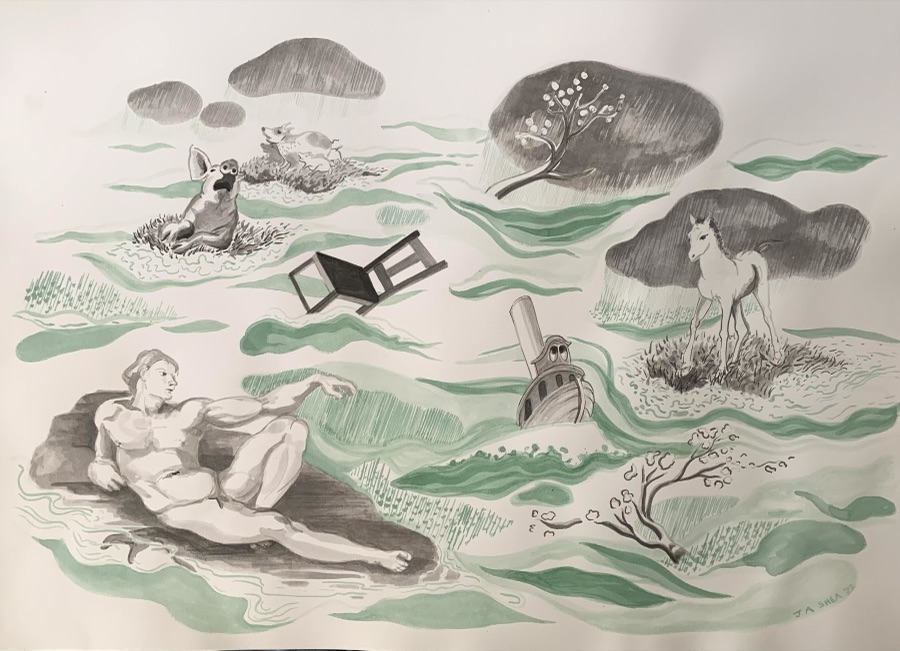
ink on paper, 56 × 76 cm
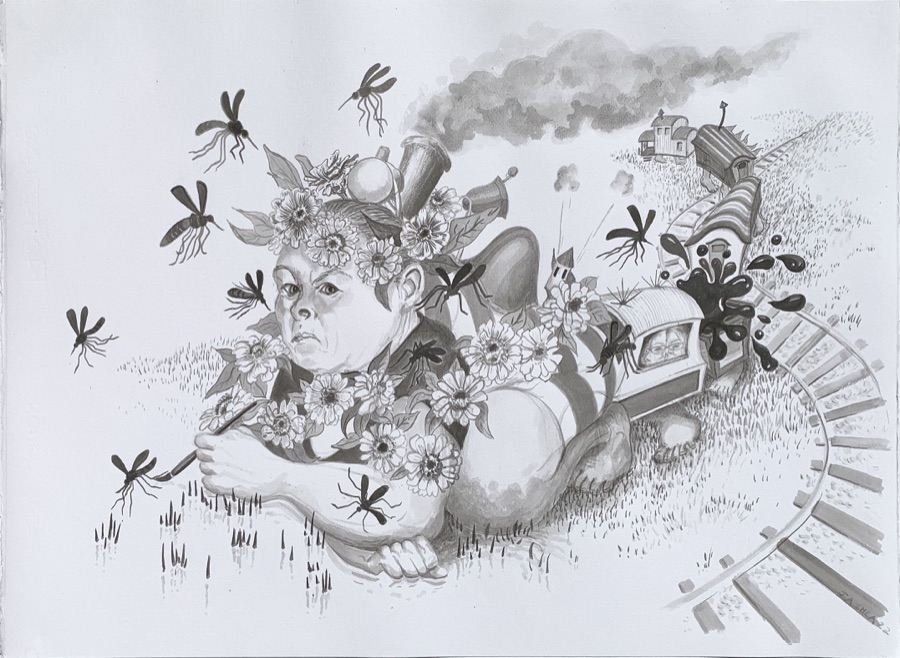
ink on paper, 56 × 76 cm
4. Self Portrait with Broken Wing
Ink splash. Half a face and upper torso appeared. I supplied the other half completing a self-portrait, then defined the apparent broken insect wing on the head.
Sunflowers on my work desk called out to be added which I did tentatively on separate paper at first then directly onto the artwork. The Russian/Ukrainian war screamed its presence. A discarded study of sunflowers was cut up, thrown down and glued on to the artwork like the detritus of war.
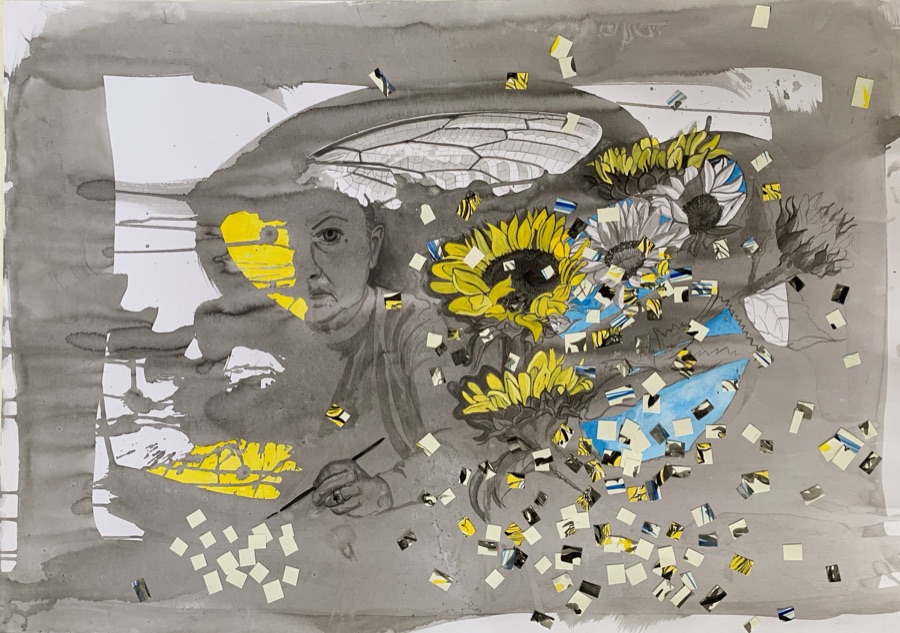
ink & collage on paper, 70 × 100 cm
5. Between Faith and Disbelief
A line from a book called The Sufis by Idries Shah says “It is only here, in this narrow strip between faith and disbelief, that the truth is to be found”.
Object: to find “truth”. Method: Experimental Dada Technique — an irrational method for making an artwork following instructions randomly obtained. This method breaks the logical way of developing an artwork (based on a continuum of choices) by following a path chosen by an outside and disinterested agent/force/influence/machine — leaving the creation to chance. The method gives surprising and often serendipitous outcomes. It can be used to break out of familiar, repetitive and predictable art making processes and results.
Use pink (magenta) ink to represent faith and black ink for disbelief.
Throw down ink onto wet (or not) paper to form random stains.
Search for “truth” in gaps between pink and black ink.
Cut into strips and weave together.
Abandon hope.
Start at beginning.
Search for truth in gaps.
Give up and tear sheet of stained paper into pieces.
Pile into a stack.
A few days later…
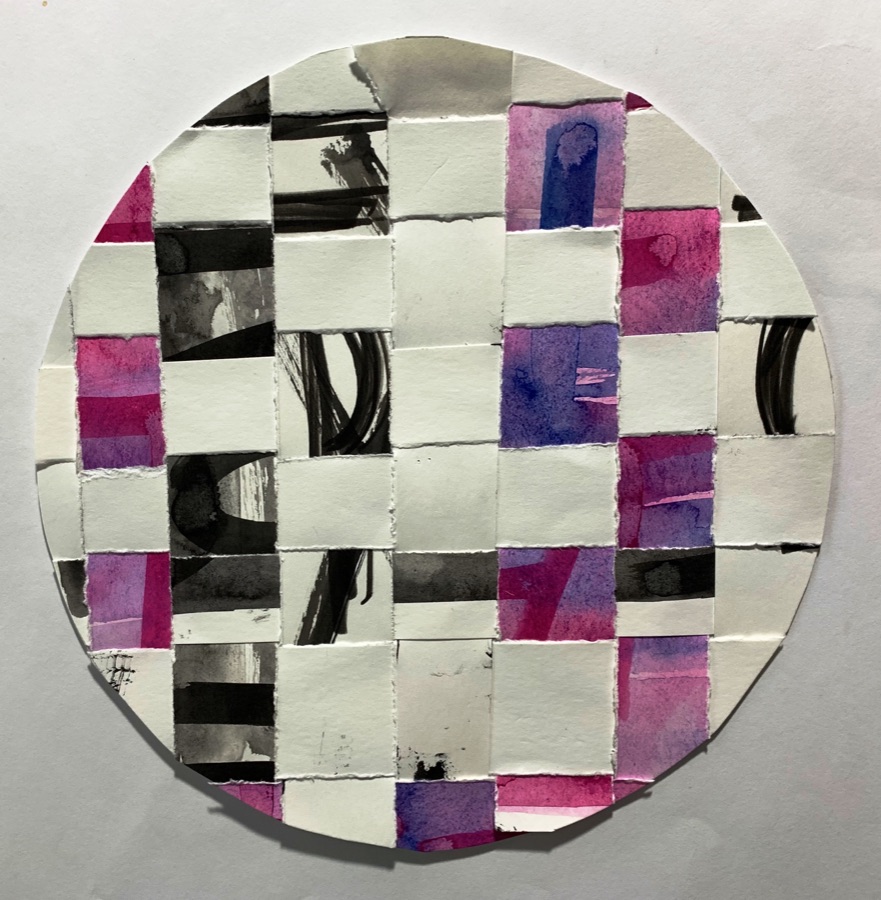
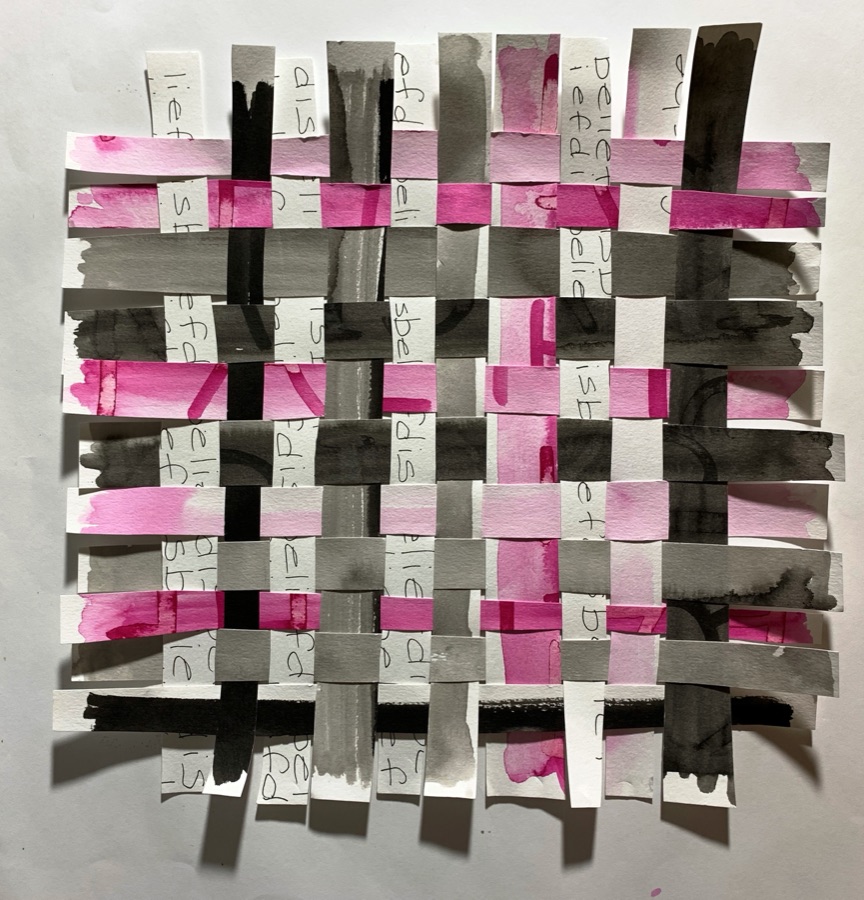
Take the first book I see that looks pink — a Roy Lichtenstein catalogue — and open the book randomly: “Art is what you will it to be, one must rise above one’s own taste, sometimes.” — Leo Castelli, 1962. Flip pages of the catalogue and place a finger on random words without looking. Write each “found” word onto a scrap of the stained paper pieces I ripped up before. Stick pieces of torn up paper onto a backing sheet in the order that they come off the pile. Interpret images suggested and use words written on that section to direct the art making process. Remember the Lichtenstein influence.
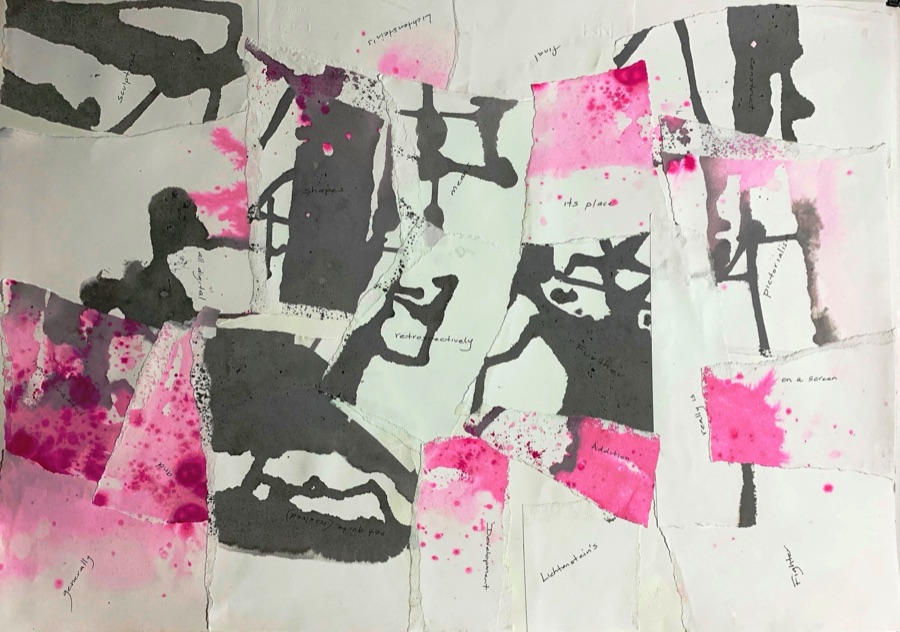
ink collage, 70 × 100 cm
A vaping soldier sitting in a tank appears so I go with that theme, using prompts that surround the image: all digital, handcrafted, sculptures. I make 2D images and digital printouts mounted onto foamcore, cut and fold paper, and papier mache combined into 2 and 3D artworks.
I recognise a figure either looking closely in a mirror or making a “thumbing the nose” gesture. The instruction written on that section is retrospectively. I print mirror images of the figure and place them back to back on a retrieved sheet of pink ink stained paper. Lichtenstein stars explode between them. Do the fop-haired characters look behind them in a mirror (retrospectively) or are they making rude gestures at each other’s backs?
Next there is Putin with an eagle rising off the load carried on his back. “Further” looks like “Fuhrer”. Printed mirror images become a devil face. It stands alone on a throne of ink soaked toilet paper roll.
The focus on war is becoming depressing so I turn the collage up the other way to let the negativity drain off. There is a tree and a chair like where I sit and contemplate beside our dam. Away from it all.
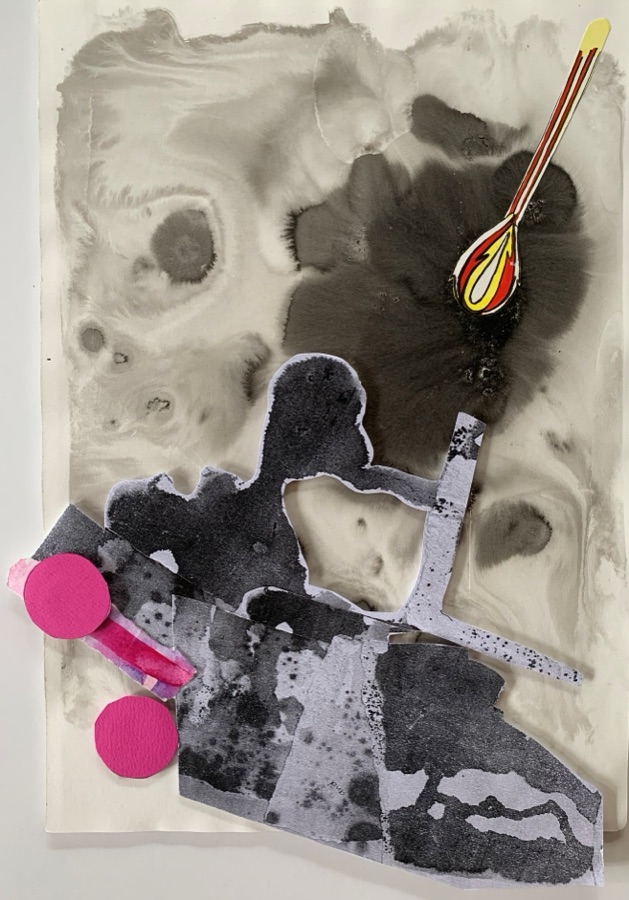
ink on paper, 45 × 35 cm
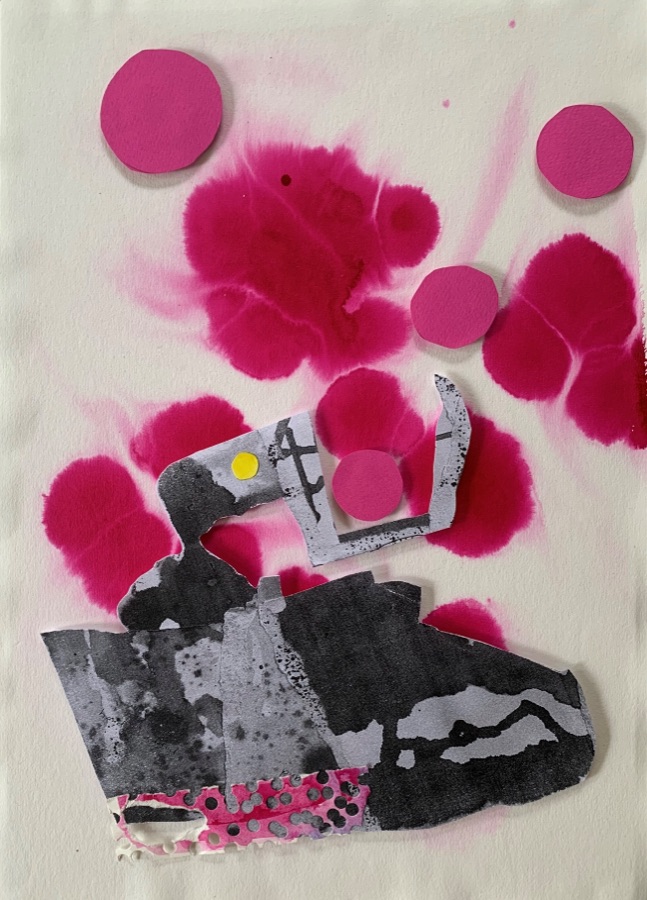
ink on paper, 45 × 35 cm
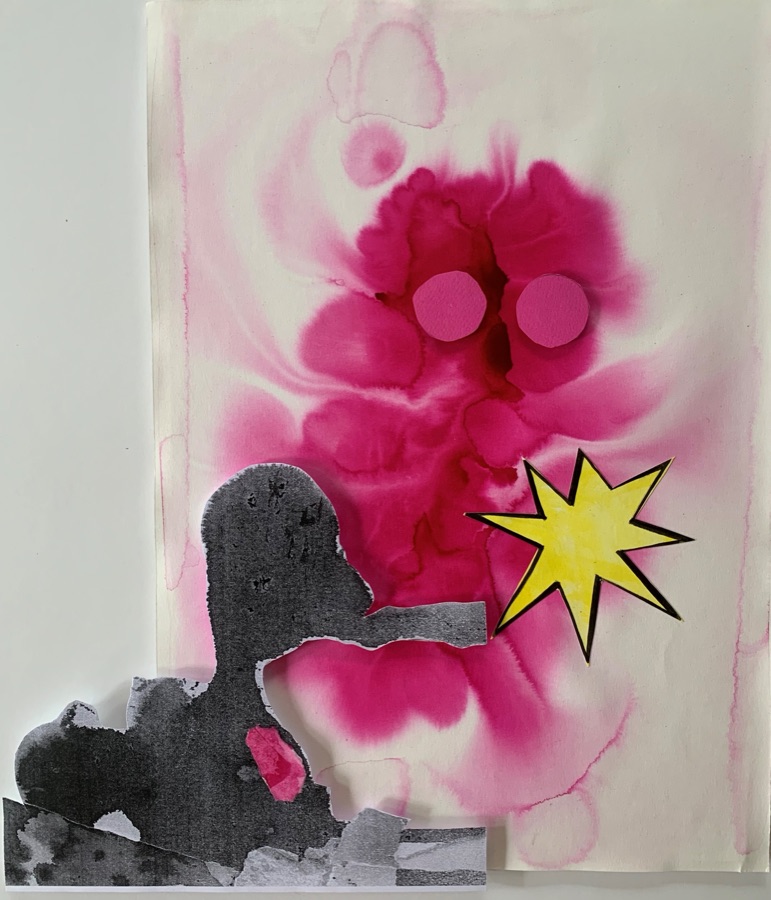
ink on paper, 35 × 45 cm
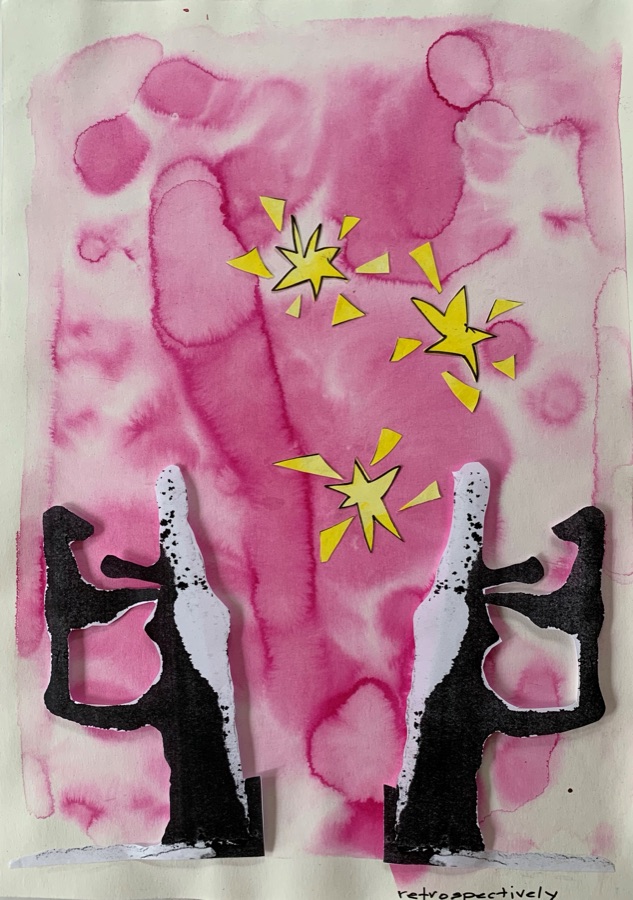
ink on paper, 45 × 35 cm
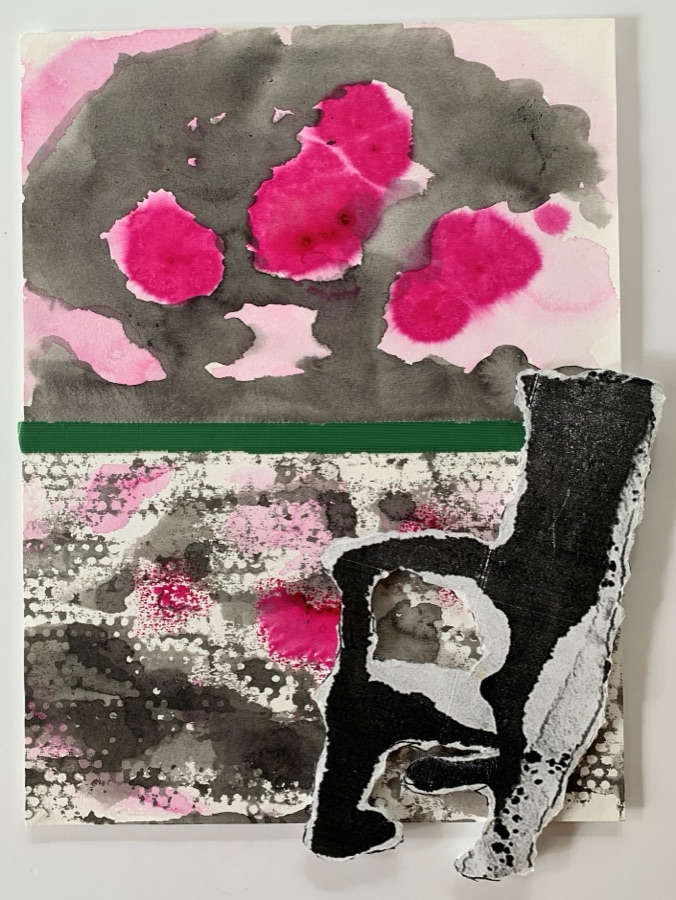
ink on paper, 45 × 35 cm
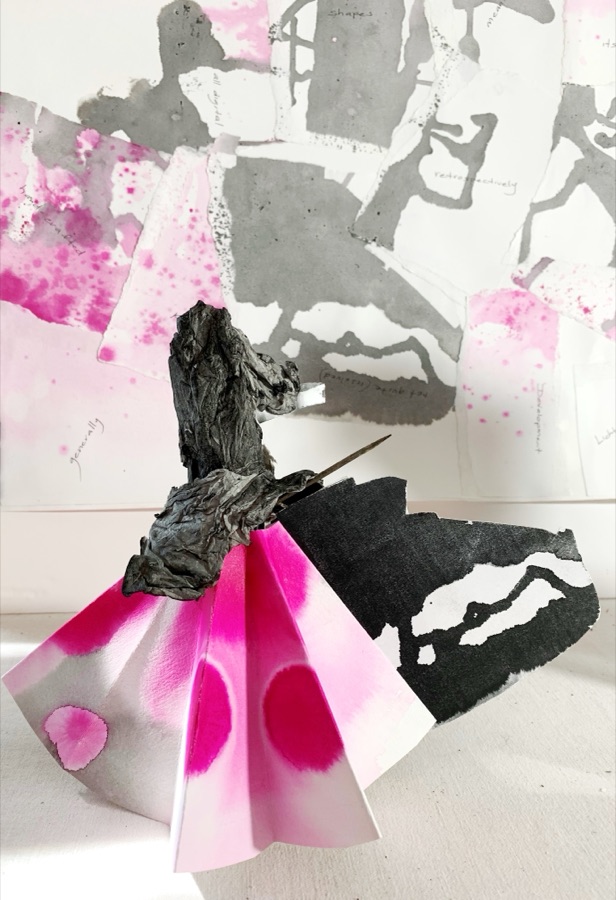
ink, paper, matchstick, 25 × 25 × 25 cm
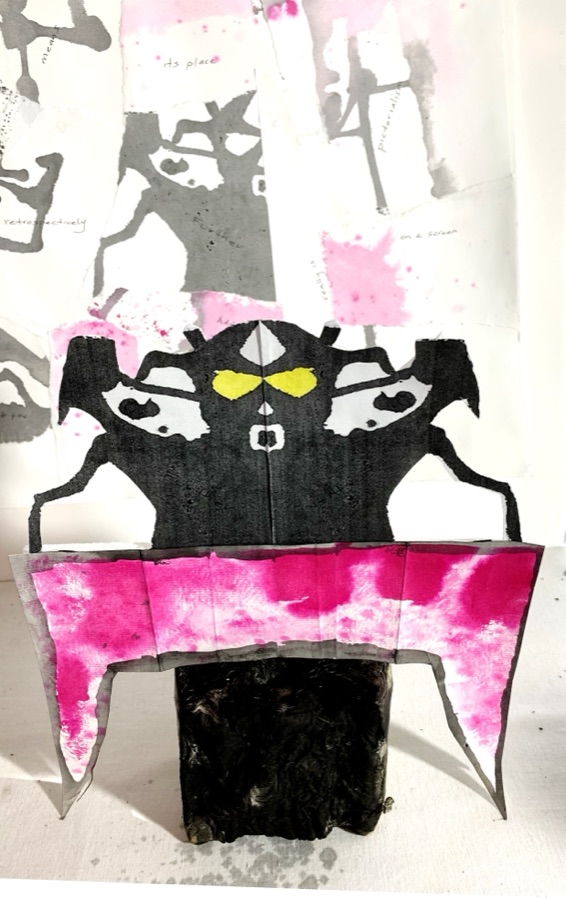
ink, paper, 30 × 30 × 20 cm
6. Joining Faith and Disbelief
I want to combine chaos and order in my drawing.
I Google “Joining Verbs” and get: Linking verbs are verbs that serve as a connection between a subject and further information about that subject. They do not show any action; rather, they “link” the subject with the rest of the sentence… No, that wasn’t what I meant: “being words” would not serve to develop the process. I ignore the prompt — too soon.
More obviously, I layer them over each other, first splashing ink over a flower drawing, then drawing flowers over ink splashes. Taking a back seat as the graphic and abstract imagery come together on the page, I draw, splash, rip and layer.
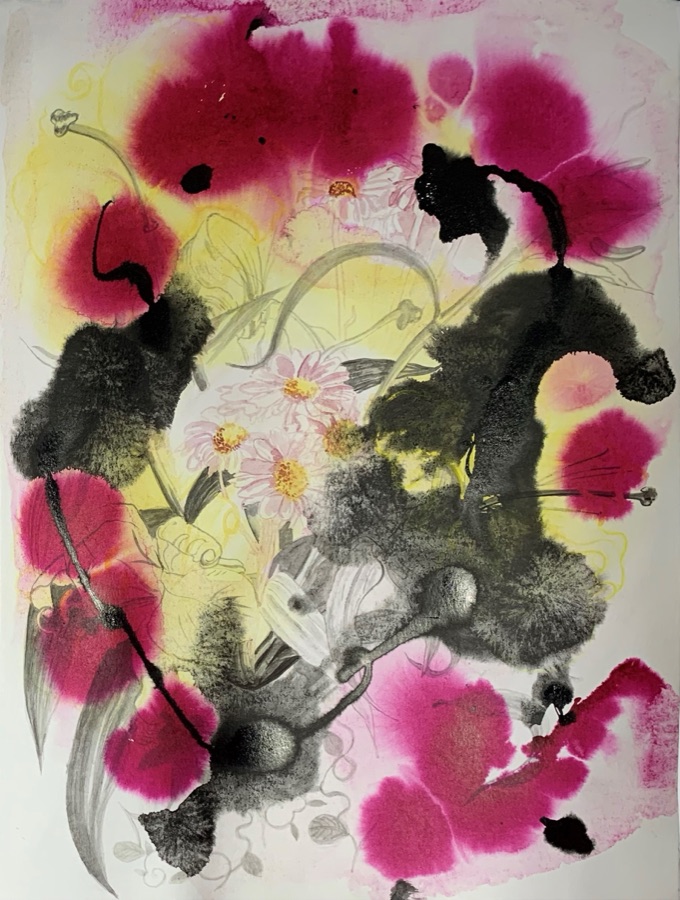
ink on paper, 50 × 35 cm
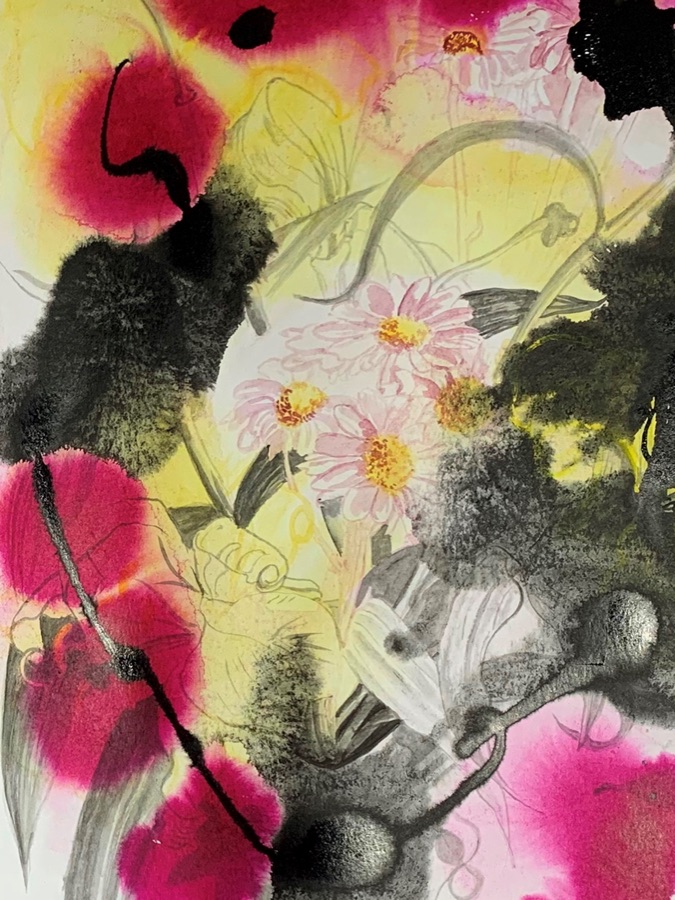
ink on paper, 50 × 35 cm
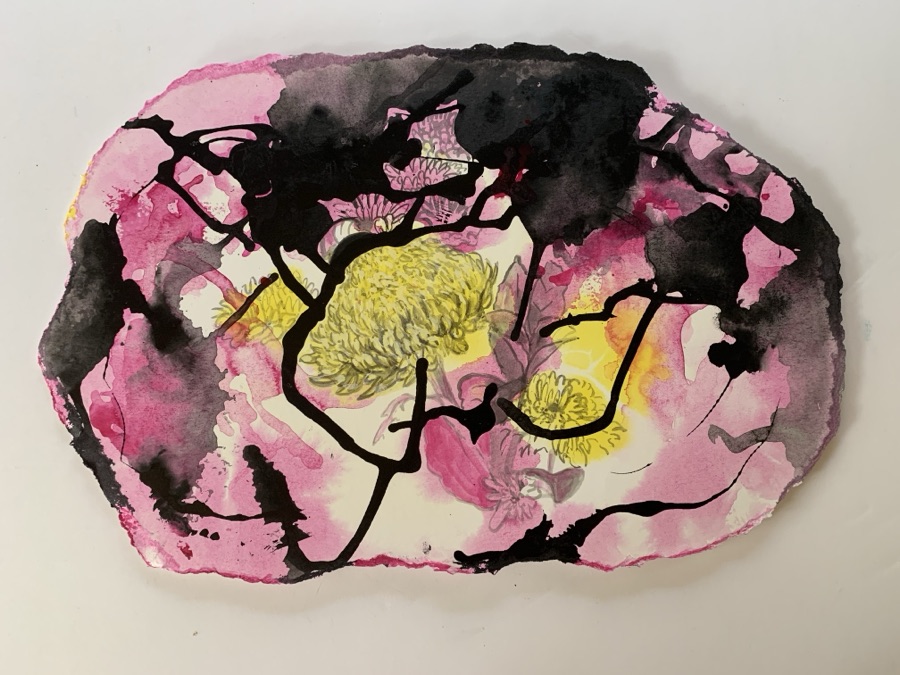
ink on paper, 33 × 38 cm
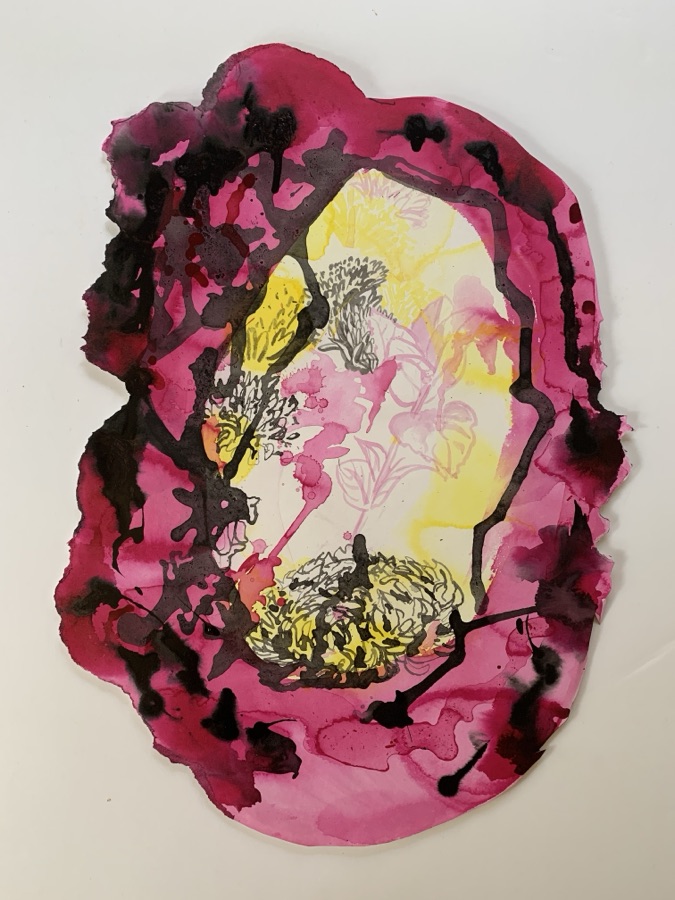
ink on paper, 56 × 40 cm
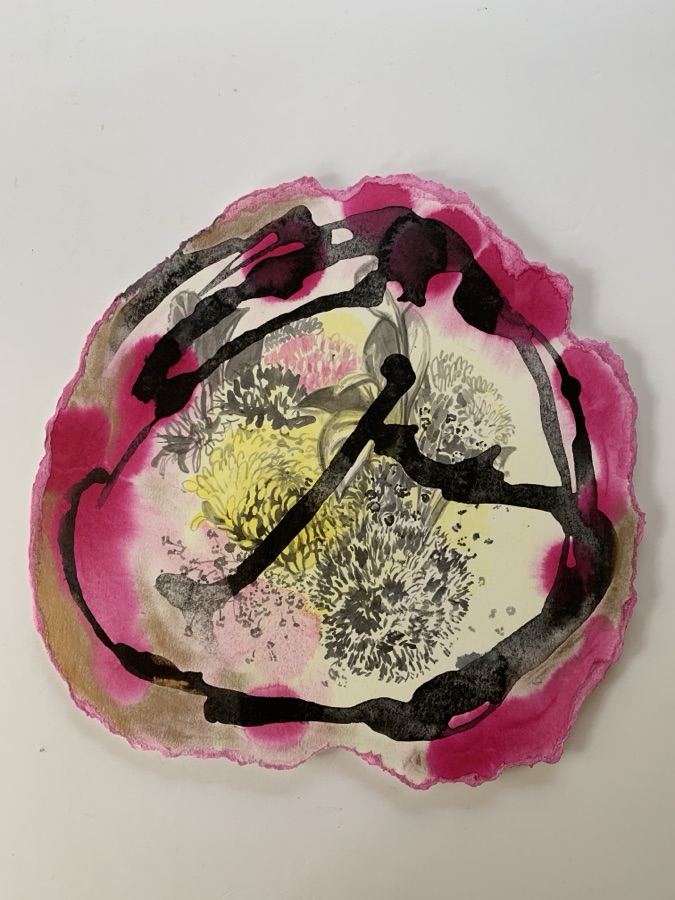
ink on paper, 35 × 35 cm
7. Art is a Doing Word: Seated Foal, Blue Foal, Floating Cows and Pig
The idea of “being words” lingers. From storage boxes I retrieve old artworks to reuse and reactivate; to collage with recent discarded drawings of flowers and horses. I push the limits — layer up — chaos on chaos. I go too far and try to salvage… making islands.
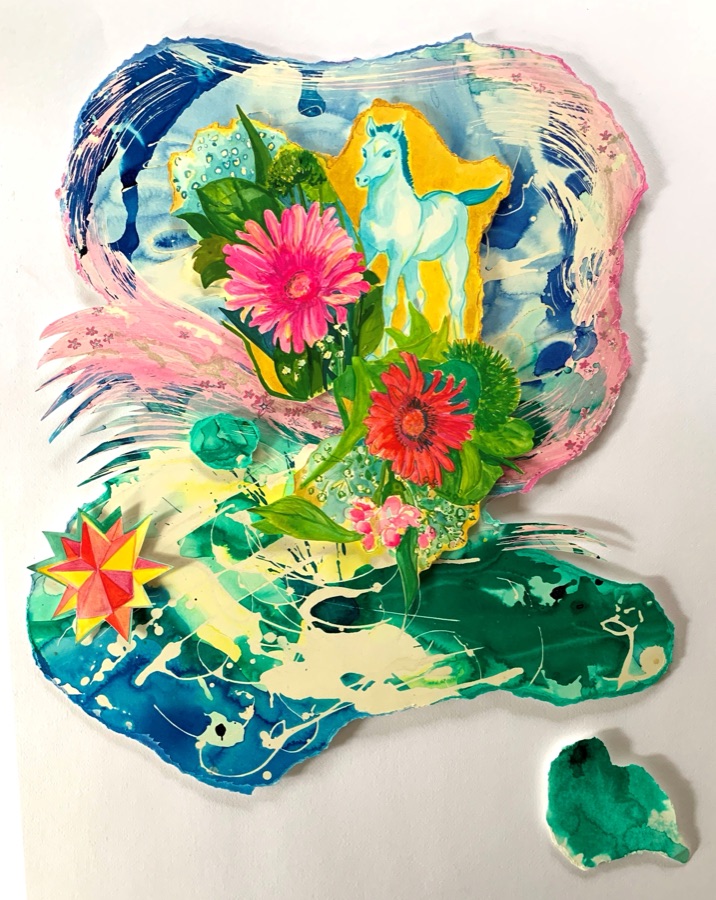
ink & gouache collage, 75 × 60 cm
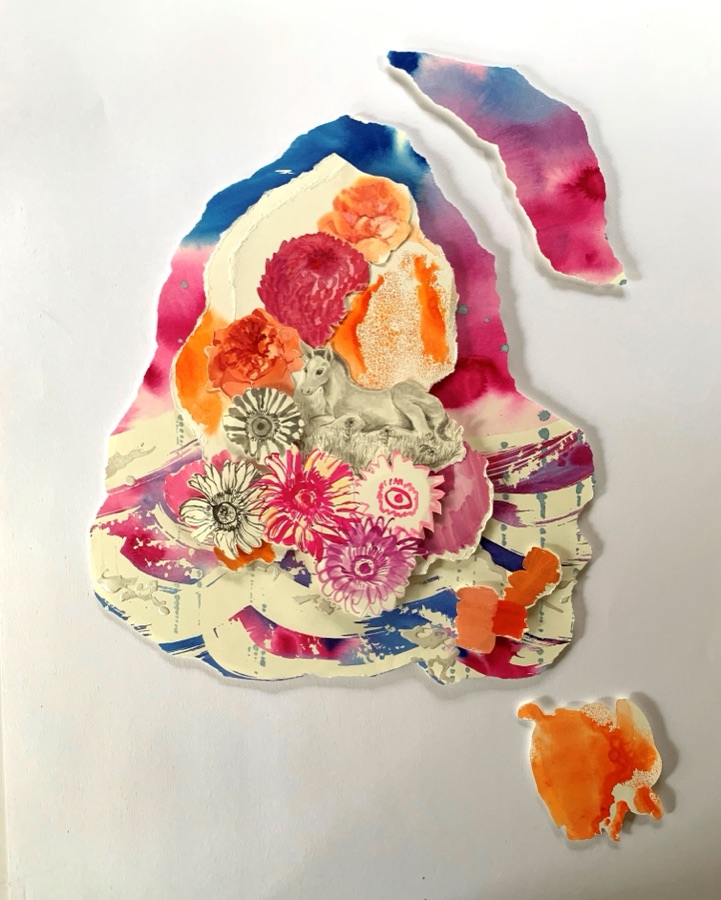
ink & gouache collage, 75 × 60 cm
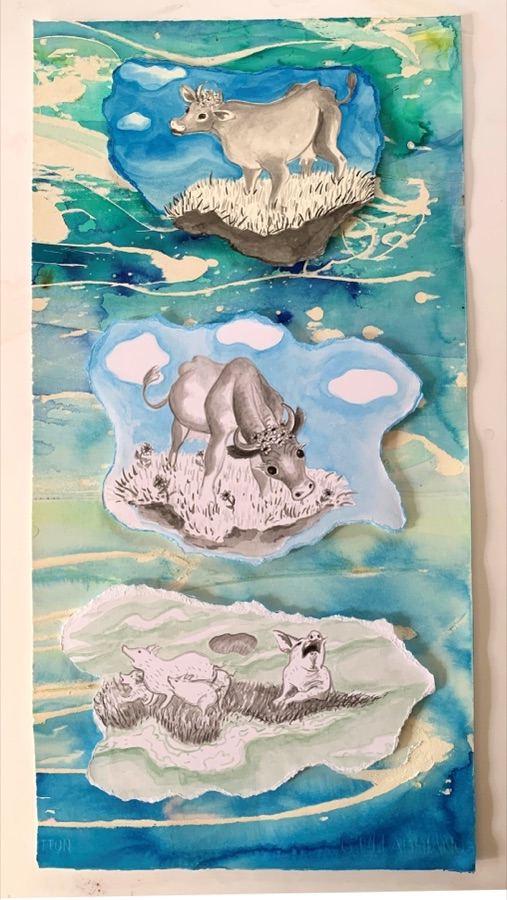
ink on paper collage, 68 × 35 cm
8. Experimental Self Portrait with Golden Roses: Art is a Being Word
I feel a need to make a magenta oval splash. I find facial structure by pareidolia in splash runs. I add facial features. I make a black ink oval splash and cut it out to surround, then adorn with golden roses.
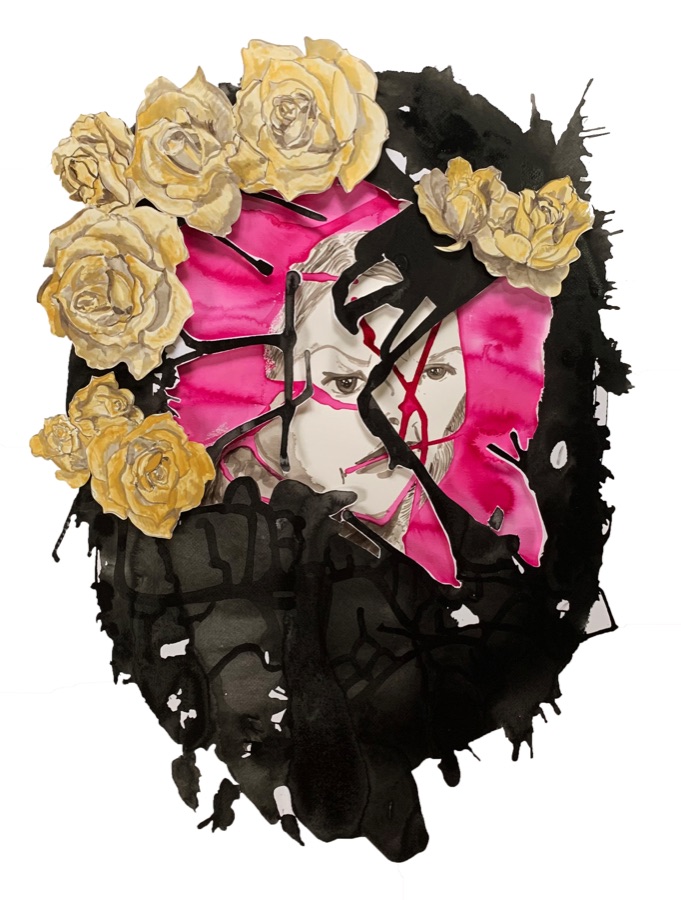
ink collage, 87 × 67 cm
9. Art is a Being Word: Melt and Flow
I become engaged in this combination of expressions and surrender to the force of flow.
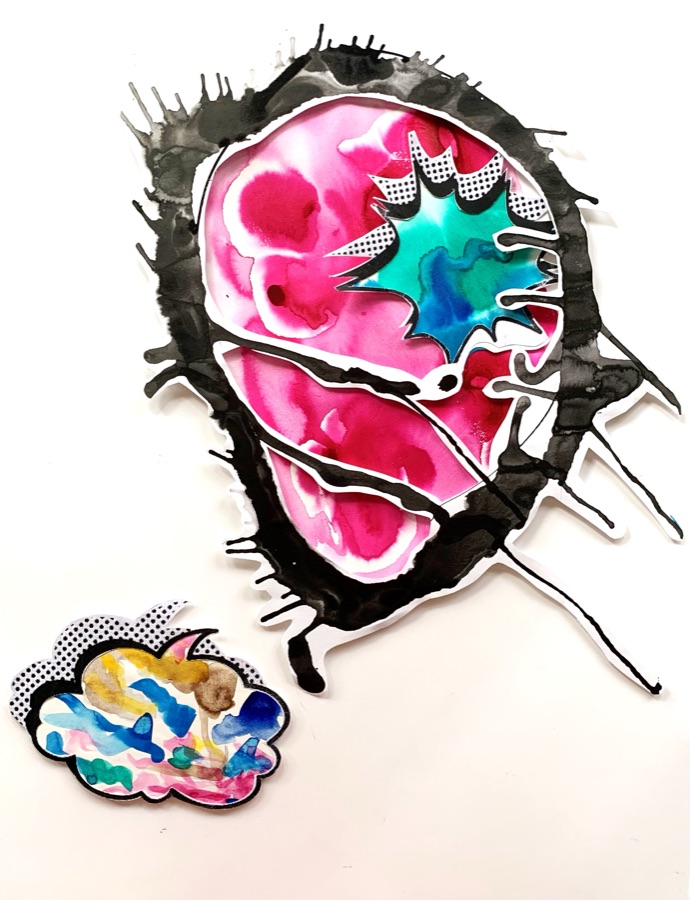
ink paper collage, 69 × 55 cm
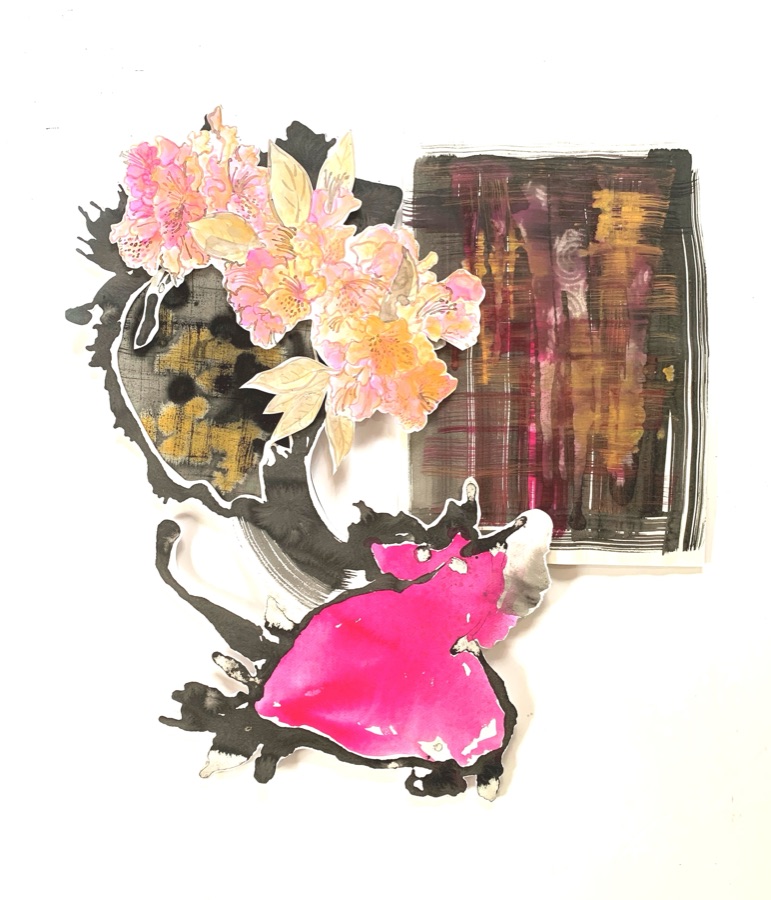
ink paper collage, 68 × 57 cm
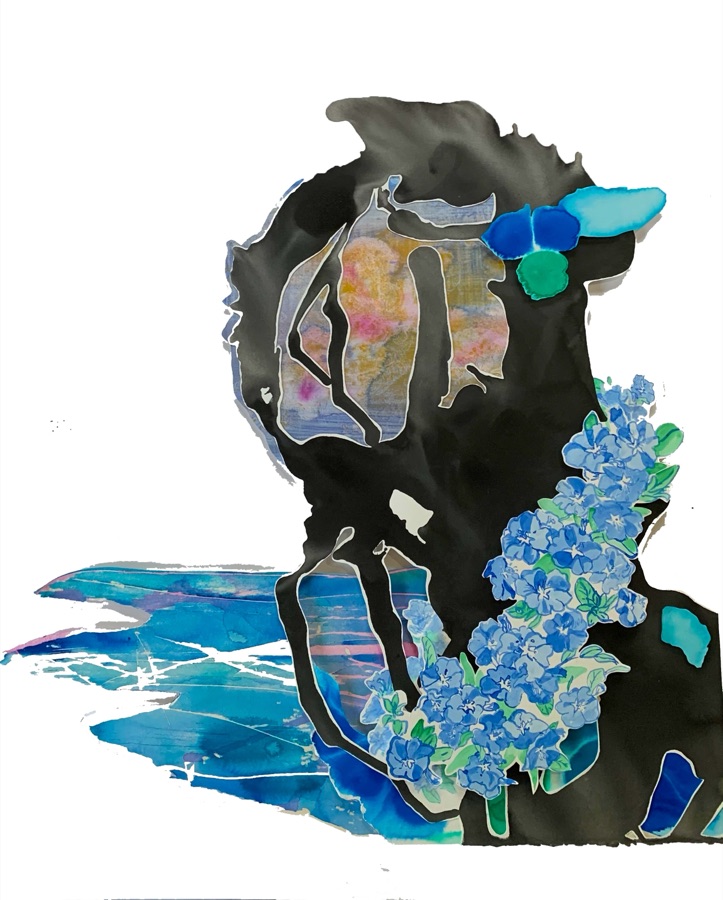
ink paper collage, 75 × 60 cm
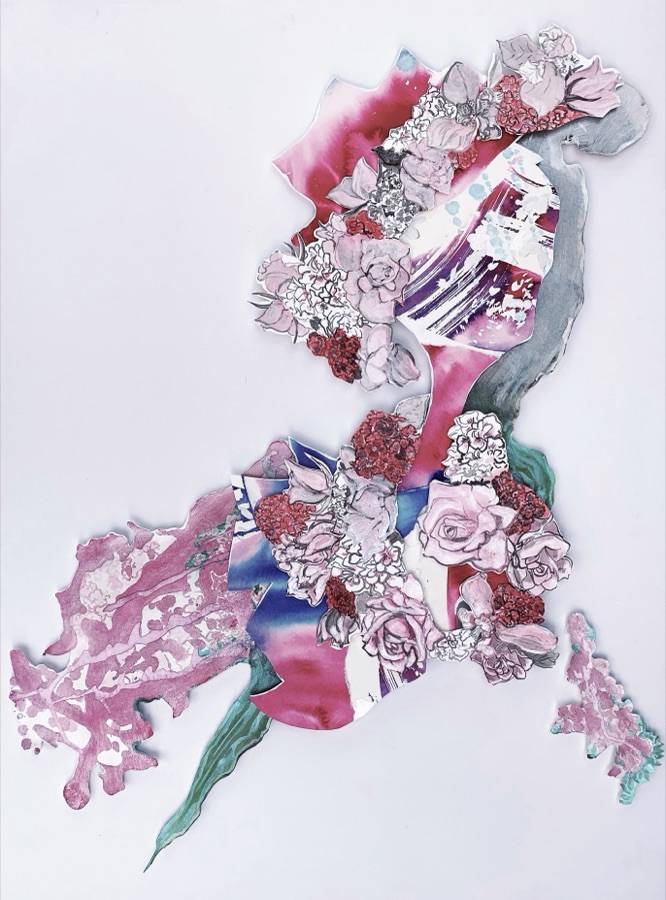
ink paper collage, 75 × 80 cm
This exhibition continued in Room 2 with See What I Say?